KOM Cycling Quick Release Light 1000 lm & 350 lm
KOM Cycling is mostly known for computer and radar mounts, but now they are expanding into the light market with the Quick Release 1000 lm and 350 lm lights. I have a few of their quick-release mounts and have zero issues with them. I think their stem mount is quite nice and gives the bike a very clean look.
But will their lights pass my rigorous testing?
These lights probably deserve their own write-up, as they are quite different and have different intended purposes (not explicitly stated by KOM Cycling). Since they are both from KOM Cycling and were released at the same time, I will review them together, separating relevant sections when they are distinct.
The market seems quite flooded with companies solely dedicated to this sector of the cycling industry, so I assume KOM Cycling did plenty of research and didn’t jump in blindly. I think these must be exceptional lights or provide something unique to really catch on. I don’t think there are enough brand-loyal buyers that will buy the light no matter what.
In this review, I am implementing some new testing procedures to accurately test battery runtimes, to see how the intensity of the light changes through the battery life cycle. In a separate blog post, I will fully describe the testing equipment, the test setup, the benefits of this testing, and how it is useful for directly comparing lights. Separately, I am compiling all this data so all lights I have tested can be compared.
Unboxing
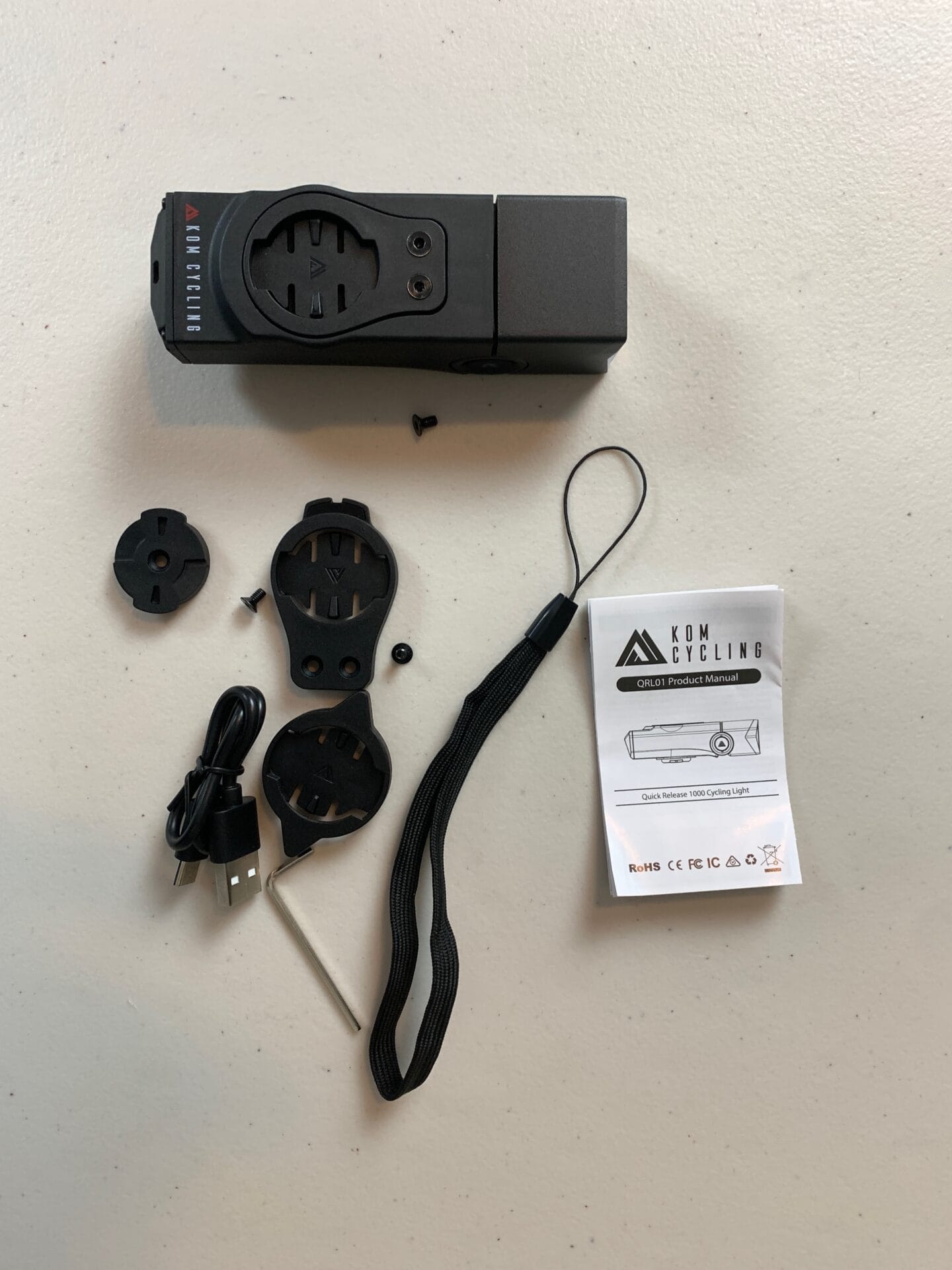
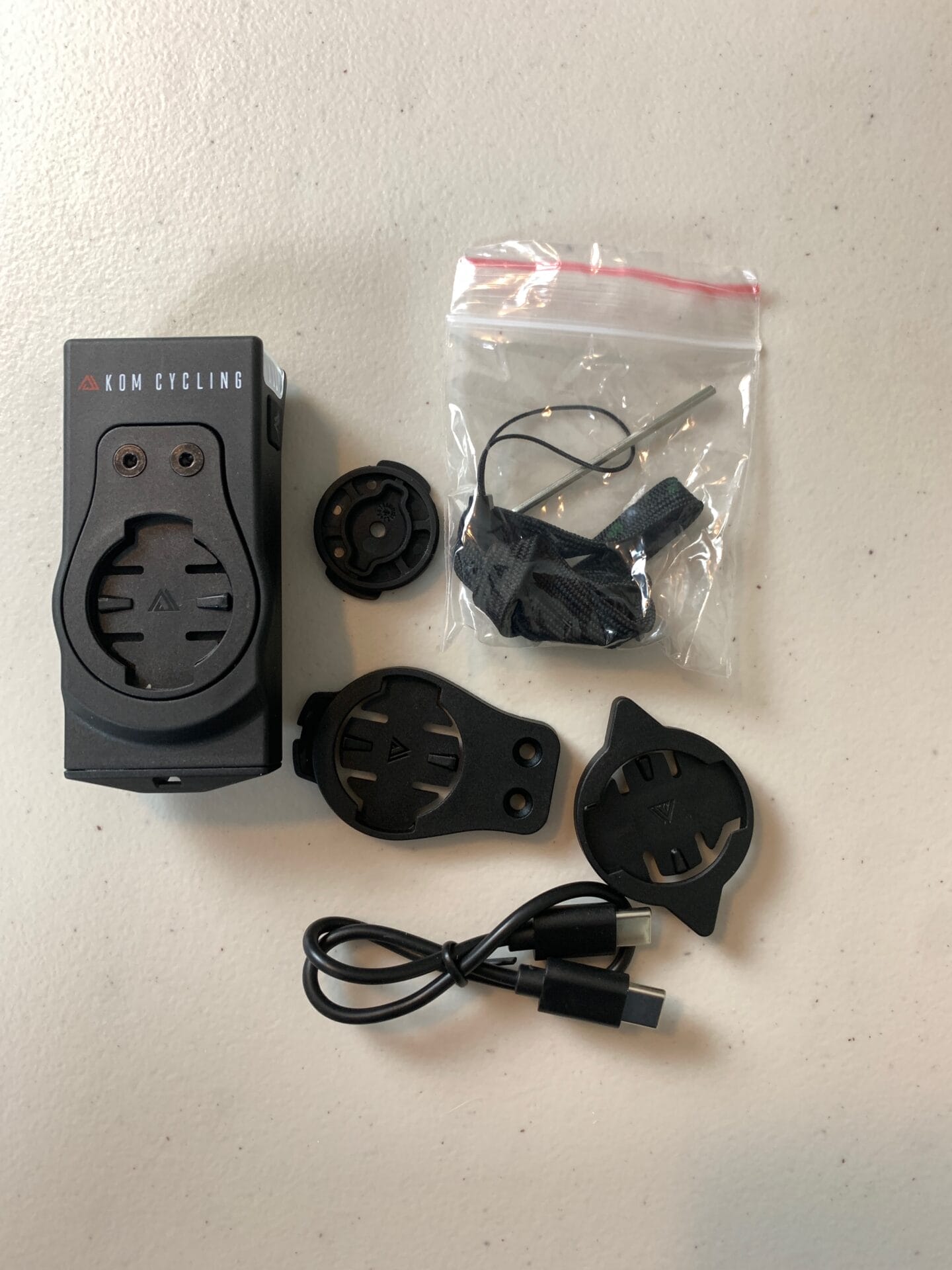
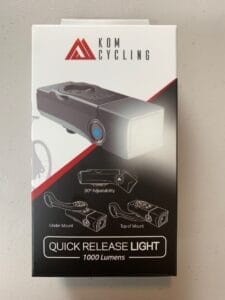
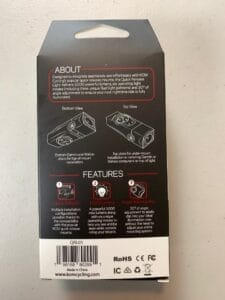
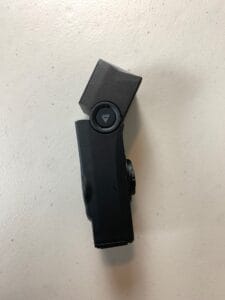
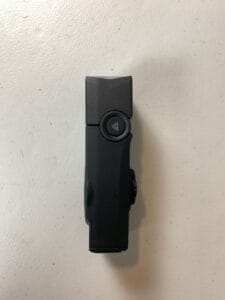
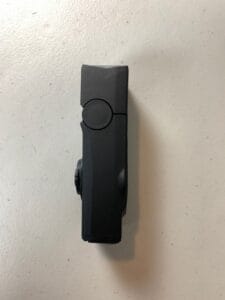
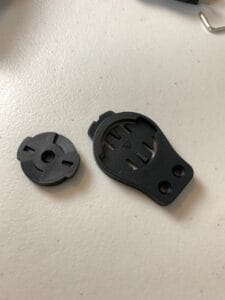
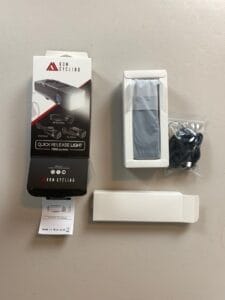
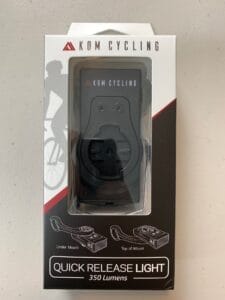
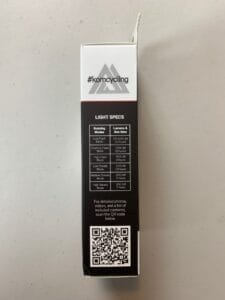
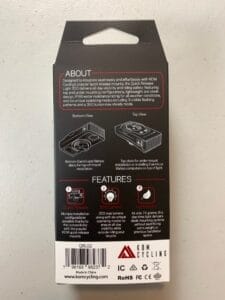
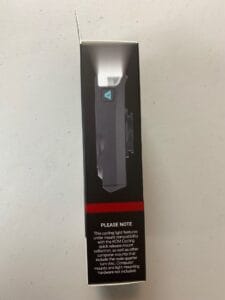
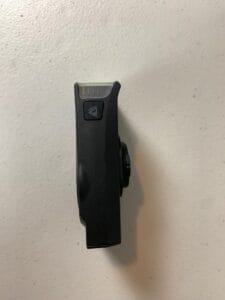
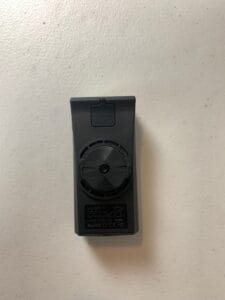
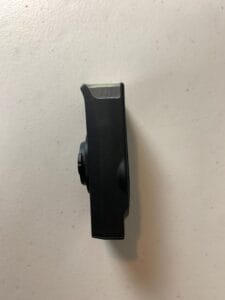
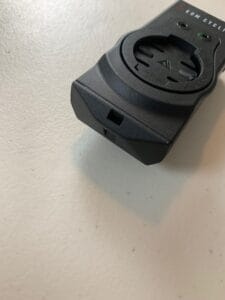
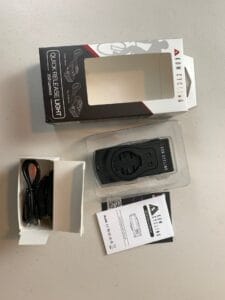
Both the KOM Cycling Quick Release Light 1000 lm and 350 lm come with two top plates, two bottom discs (Garmin and Wahoo), a safety tether, a USB charging cable, a hex wrench and screws, a Garmin-to-Wahoo adapter, and a user manual.
The 1000 lm light has a USB-A to USB-C charge cable, whereas the 350 lm light has a USB-C to USB-C cable. This is because the 350 lm has a discharge feature, and the 1000 lm light does not. I think we are to the point where companies should forgo providing cheap, short, useless cables in general, and especially not provide cables with USB-A ends.
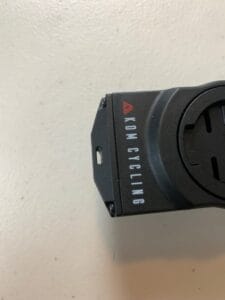
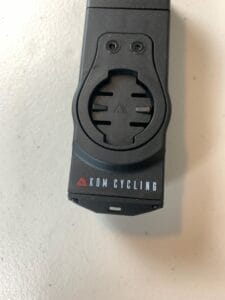
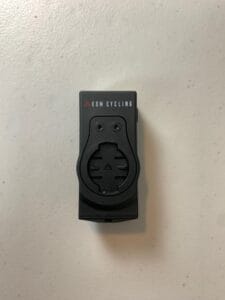
The two top plates are Garmin quarter-turn style but are rotated 90 degrees. The bottom disc is changeable to allow the device to mount onto Garmin or Wahoo mounts.


KOM Cycling Warranty and Customer Support
KOM Cycling offers a 30-day return policy for unused items in original packaging, with refunds processed after inspection. Warranty details for specific products, such as the Quick Release Lights, are not explicitly detailed on their website, but registration is available for some products.
Customer reviews highlight mixed experiences with KOM Cycling’s support. The company encourages feedback via their website and social media, indicating responsiveness. I have been fortunate to not need any customer service yet.
Price as of Mid 2025
The current price of the KOM Cycling Quick Release Light 1000 lm is $119.99 USD. The 350 lm light is $59.99 USD. The best deal is to get the KOM Cycling Quick Release Light bundle at $149.99 USD.
The Lights
Specs
1000 lm
- Lumens: 1000 lumens max output
- Mounting: Dual-Sided mount for Garmin and Wahoo
- USB Charging: USB-C charging port
- Water Resistance: IPX6 rating
- Construction: Aluminum Body w/ texture
- Battery: 3000 mAh
- Light Source: 1 LED
- Input: 5 V at 2.0 A
- Dimension: 115 x 39 x 33 mm
- Weight (mass): 160 g
350 LM
- Lumens: 350 lumens max output
- Mounting: Dual-Sided mount for Garmin and Wahoo
- USB Charging: USB-C charging port
- Water Resistance: IPX6 rating
- Construction: Aluminum Body w/ texture
- Battery: 2000 mAh
- Light Source: LED
- Input: 5 V at 2.0 A
- Output: 5 V at 2.0 A
- Dimension: 80 x 30 x 25 mm
Weight (mass): 75 g
Light Modes
1000 lm
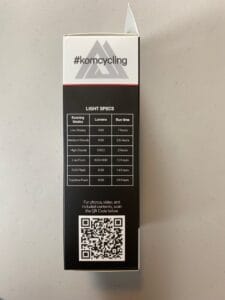
- Low Steady: 300 lumens – 7 hours
- Medium Steady: 600 lumens – 3.5 hours
- High Steady: 1000 lumens – 2 hours
- Low Flash: 600-300 lumens – 10 hours
- SOS Flash: 600 lumens – 14 hours
- Daytime Flash: 600 lumens – 24 hours
350 lm
- Low Flash: 30-100 lumens – 15 hours
- Daytime Flash: 200 lumens – 20 hours
- High Flash: 300 lumens – 4 hours
- Low Steady: 100 lumens – 10 hours
- Medium Steady: 200 lumens – 5 hours
-
High Steady: 350 lumens – 2 hours
Charging/Discharging
The KOM Cycling Quick Release Light 350 lm has power bank functionality. Use the provided USB charging cable to charge a device. Only small electronic devices like bike taillights, cycling computers, or cameras can be charged with the 350 lm light. This device doesn’t have the capability to charge larger devices.
This feature can be turned off/on too. Press and hold the power button for 10 seconds until the light flashes three times.
Light Interface
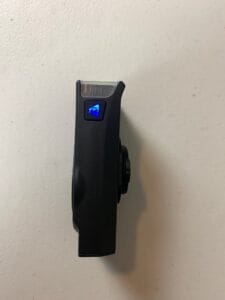
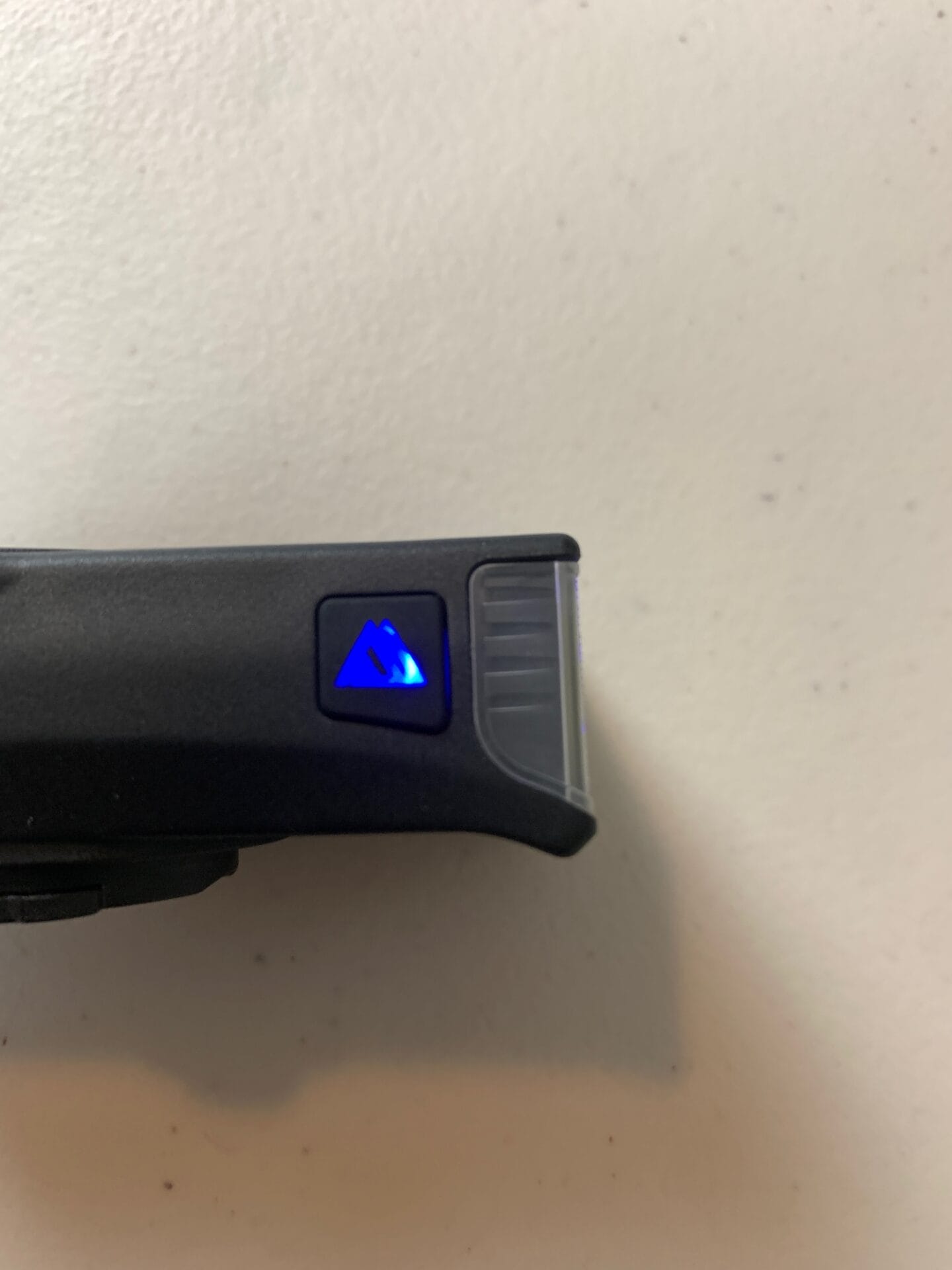
Both the 1000 lm and 350 lm use a single button on the right side of the device to control it. The button also serves as the battery life indicator. Press and hold the power button for about a second to turn on/off the light.
When turning on the 1000 lm light, it defaults to low steady mode, whereas the 350 lm light defaults to the low flash mode. These lights do not have memory and always turn back on to the default mode.
With the light on, click the button to scroll through the different light modes. One nice feature of these lights is when you double-click the power button, it scrolls in reverse through the light modes.
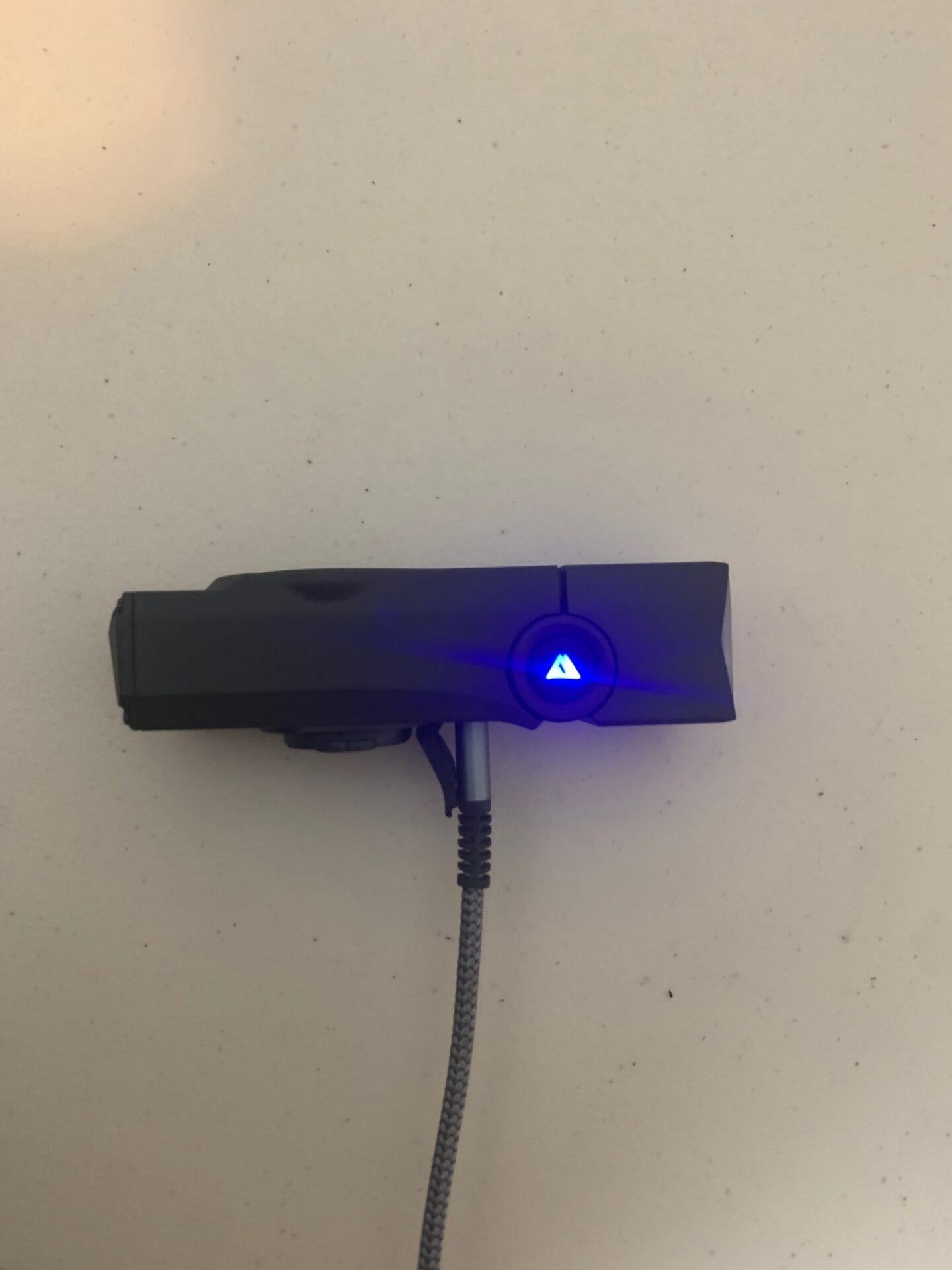
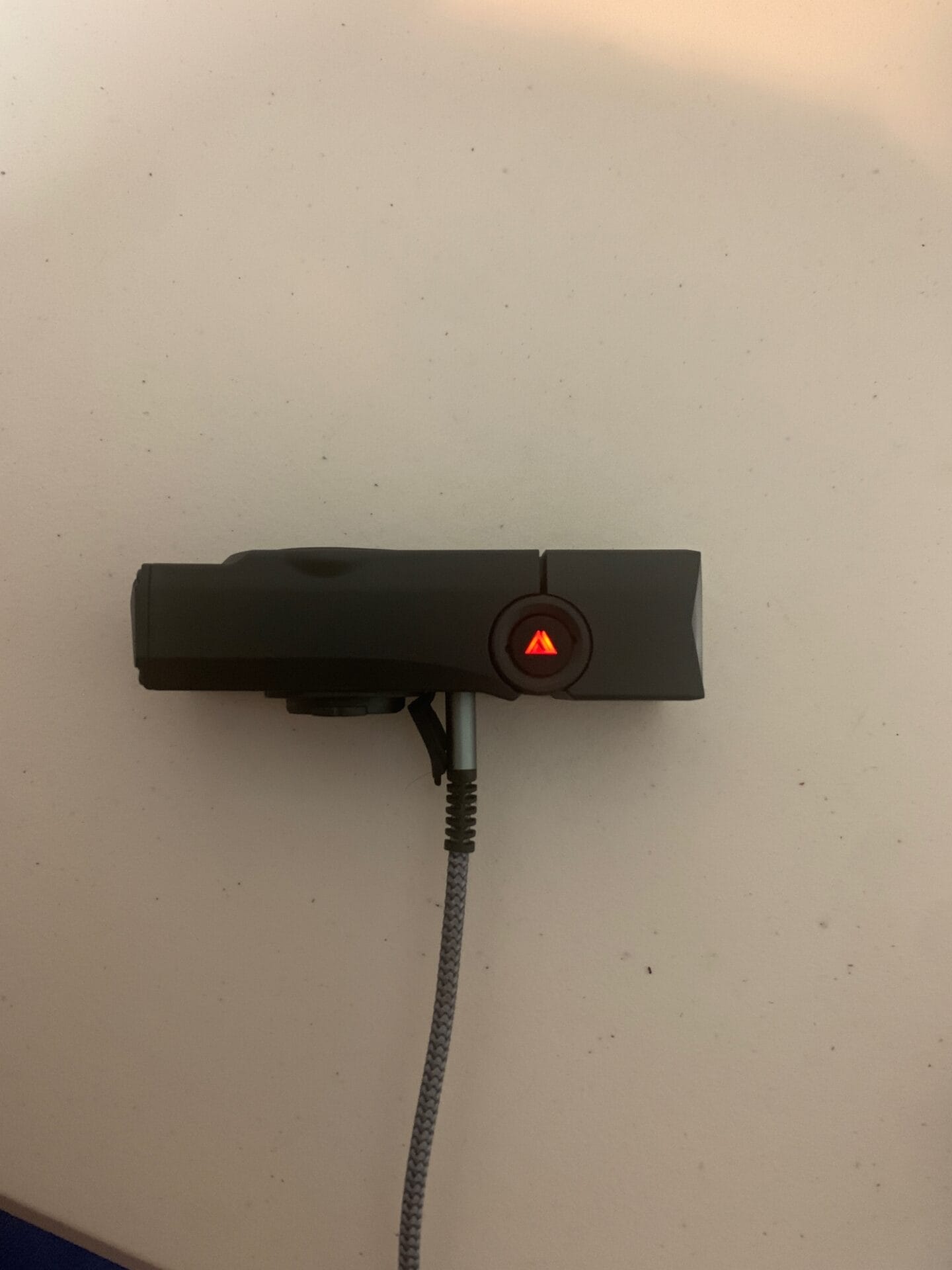
As mentioned, the power button serves as the battery indicator. When the light is off, click the button quickly to display the battery status. When the indicator light is blue, the battery life is 60%-100% charged. Yellow is 21%-60%, and red is 1%-20% battery life. When charging, the light will flash red and, once fully charged, it turns blue.
Mounting
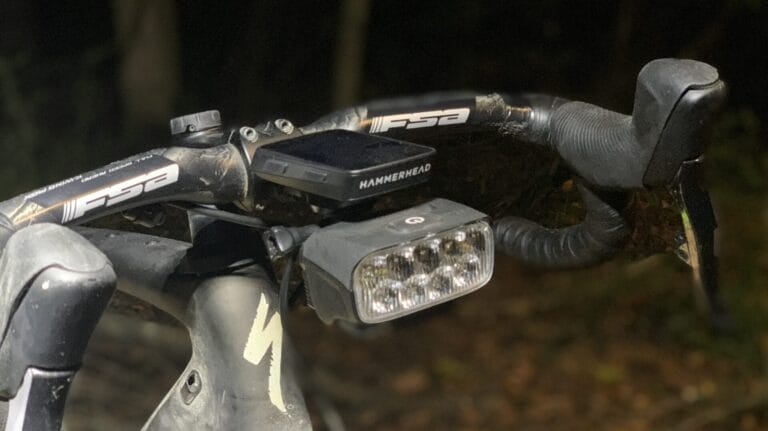
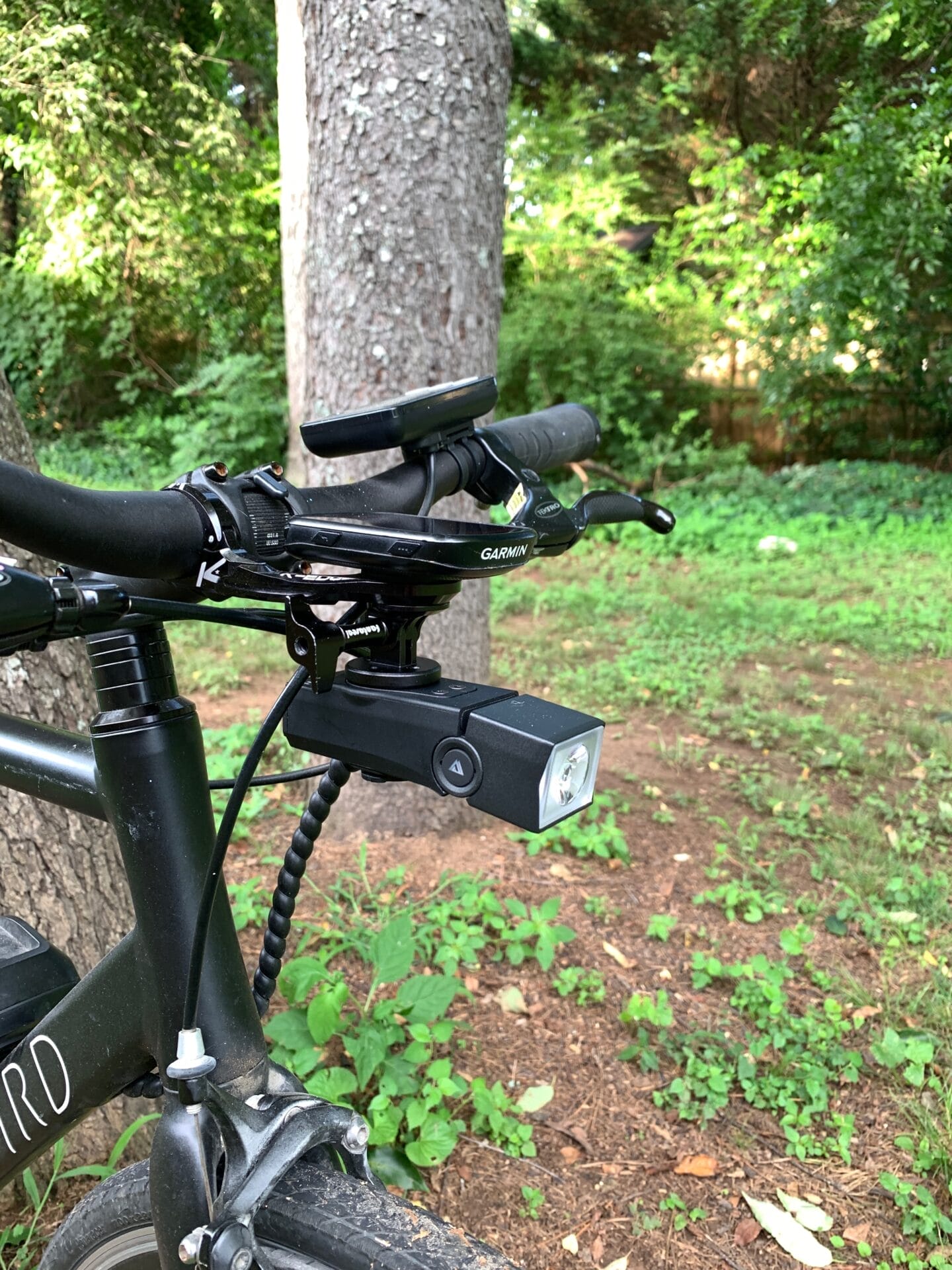
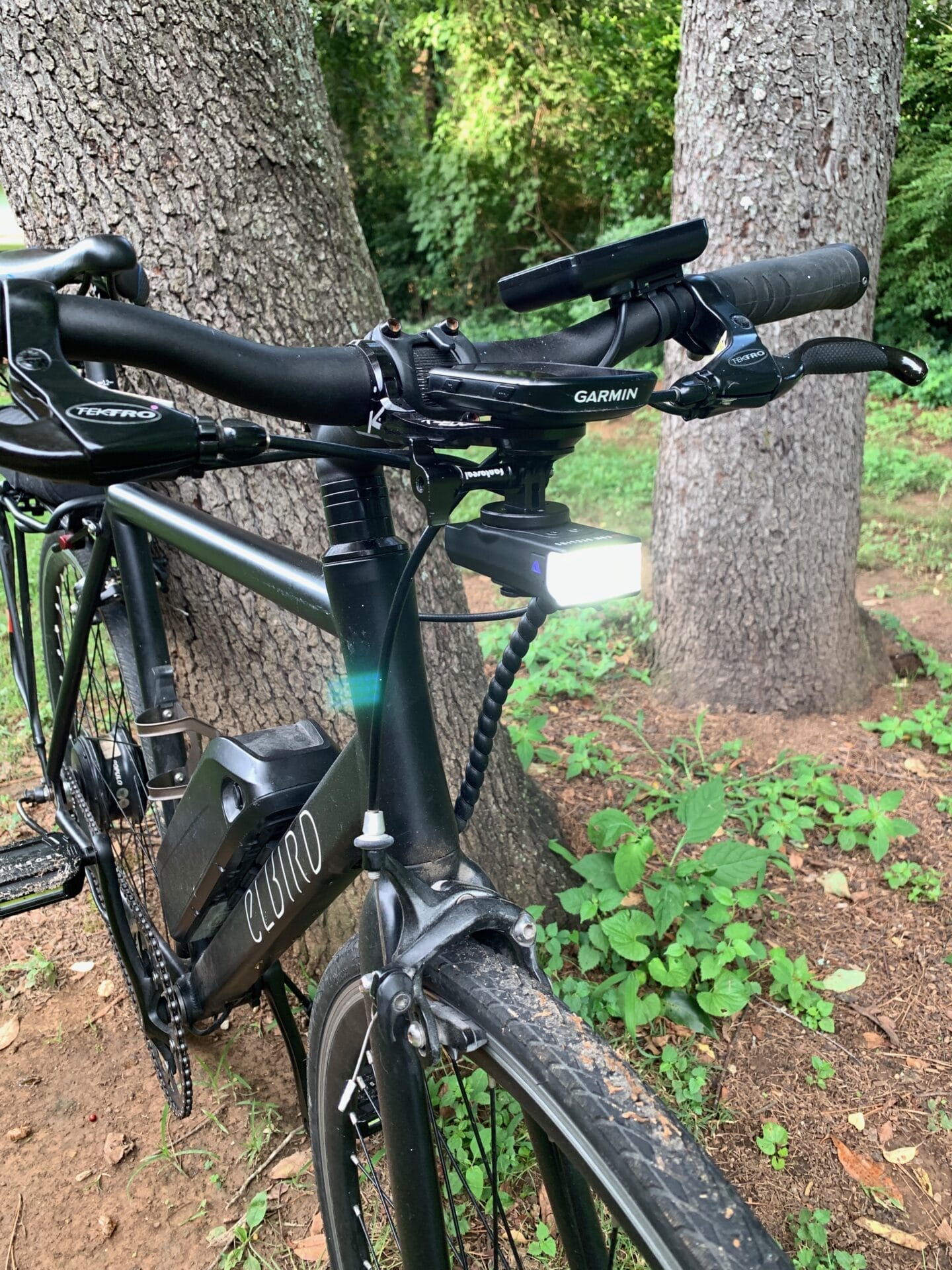
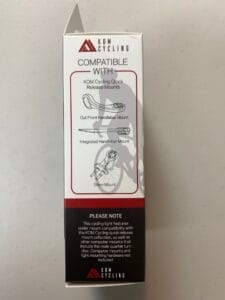
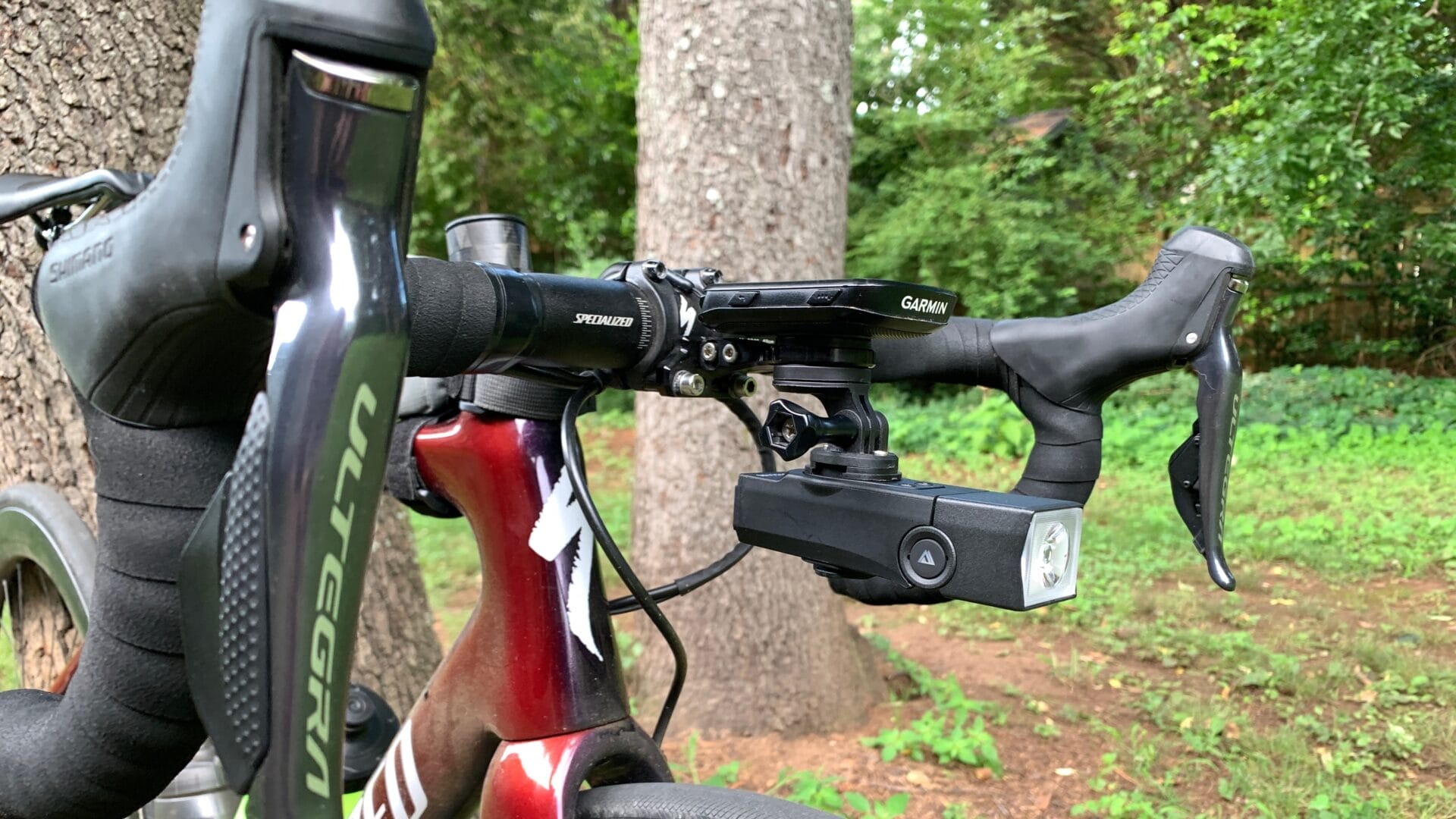
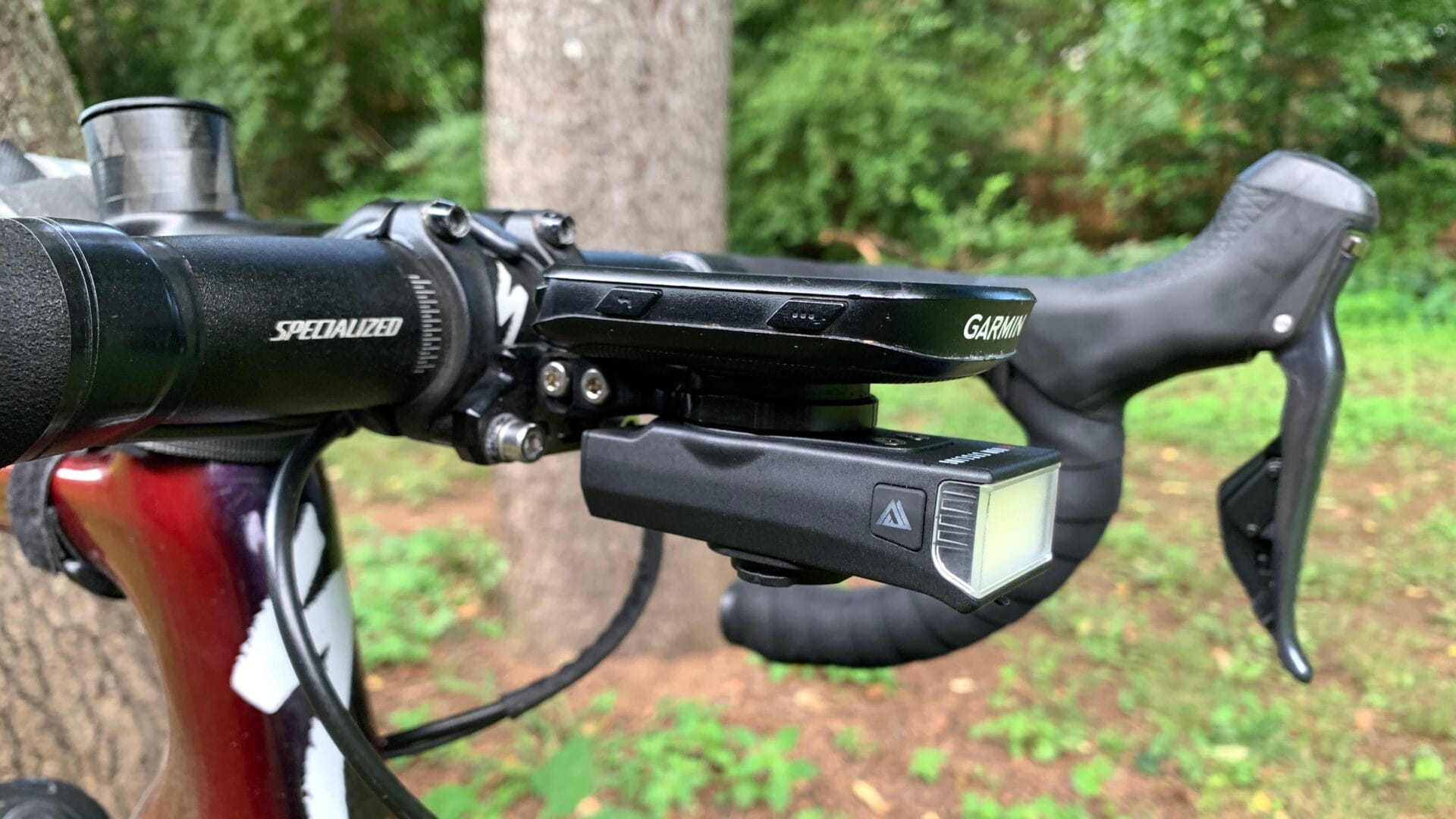
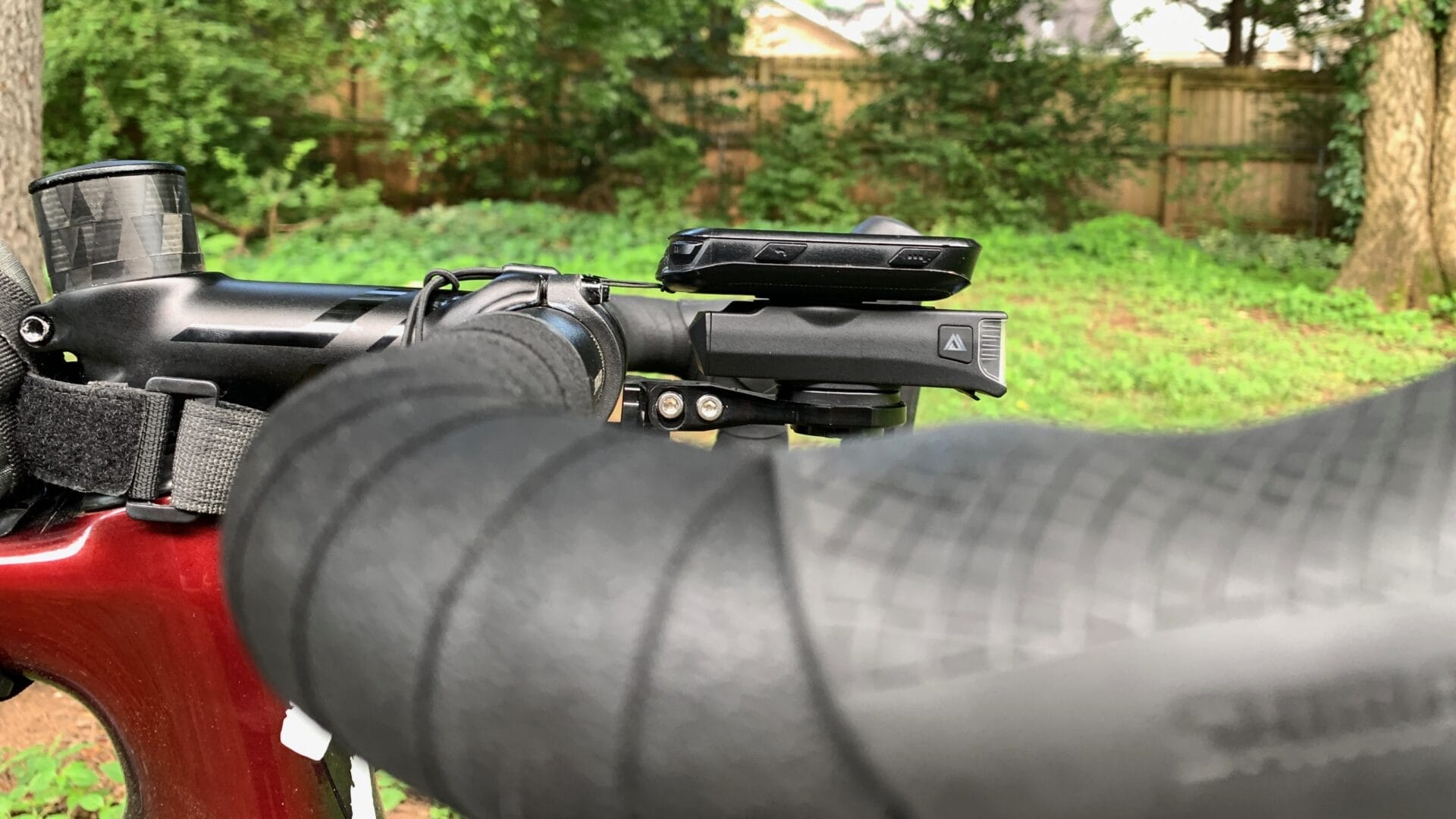
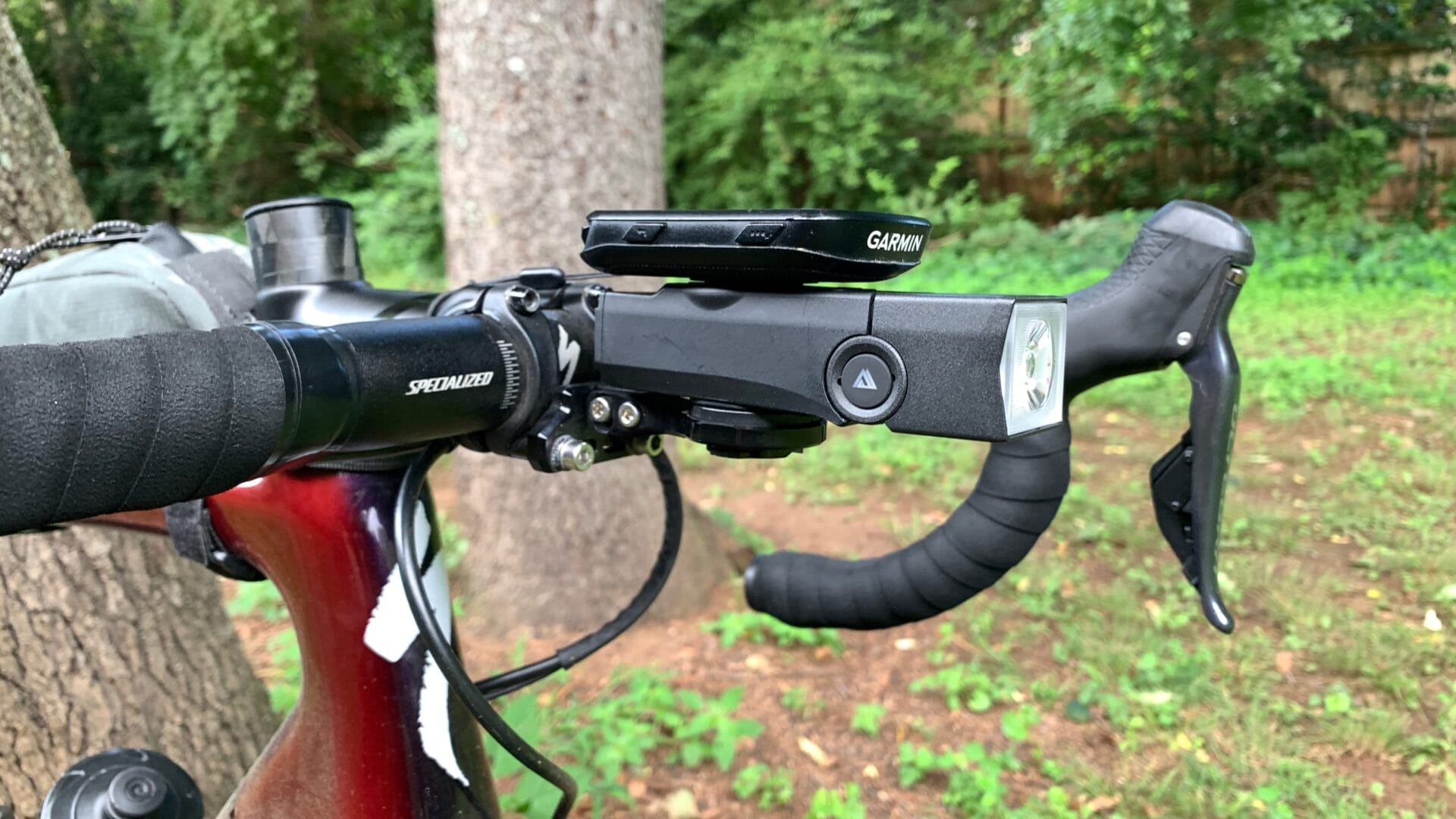
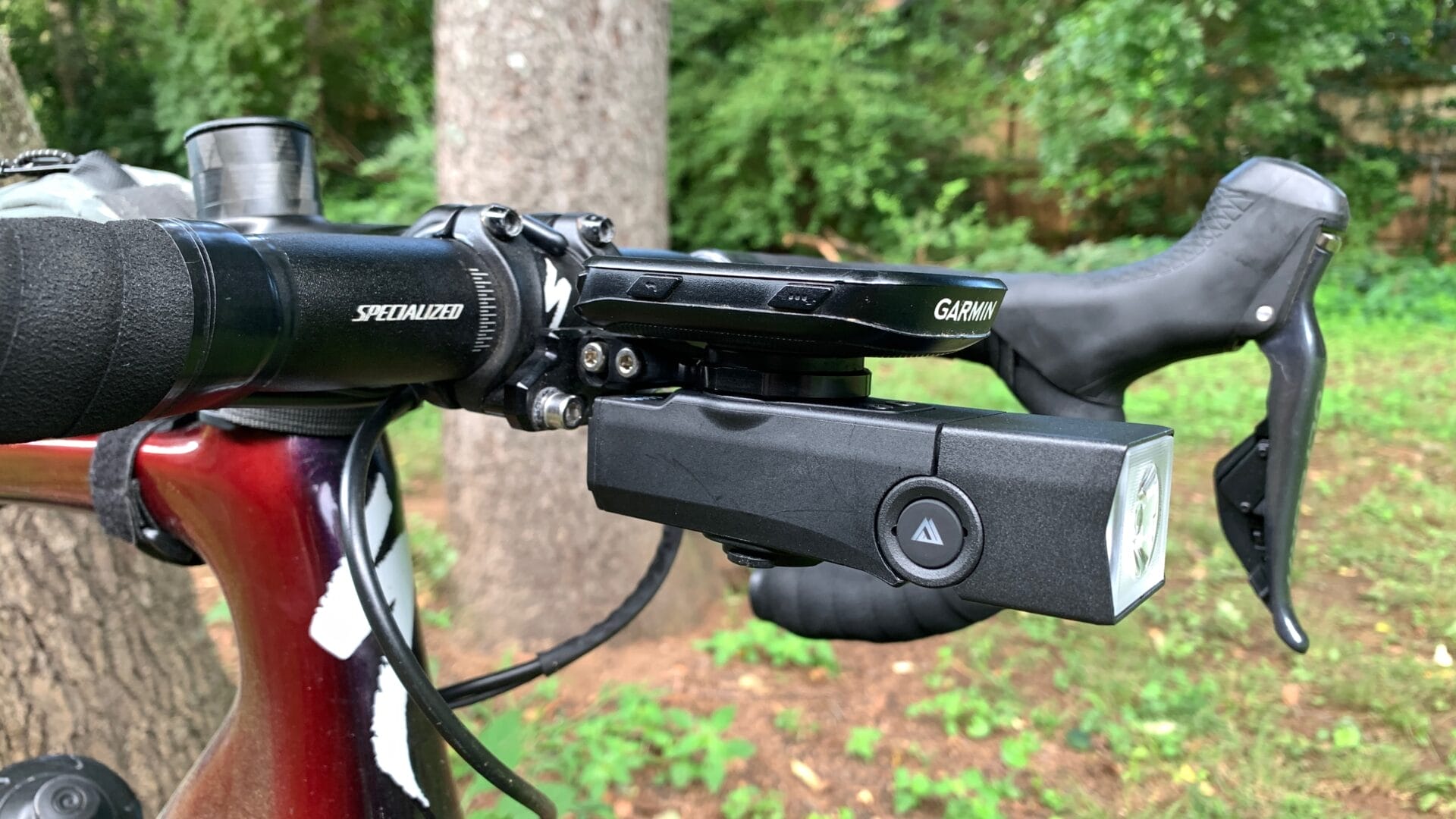
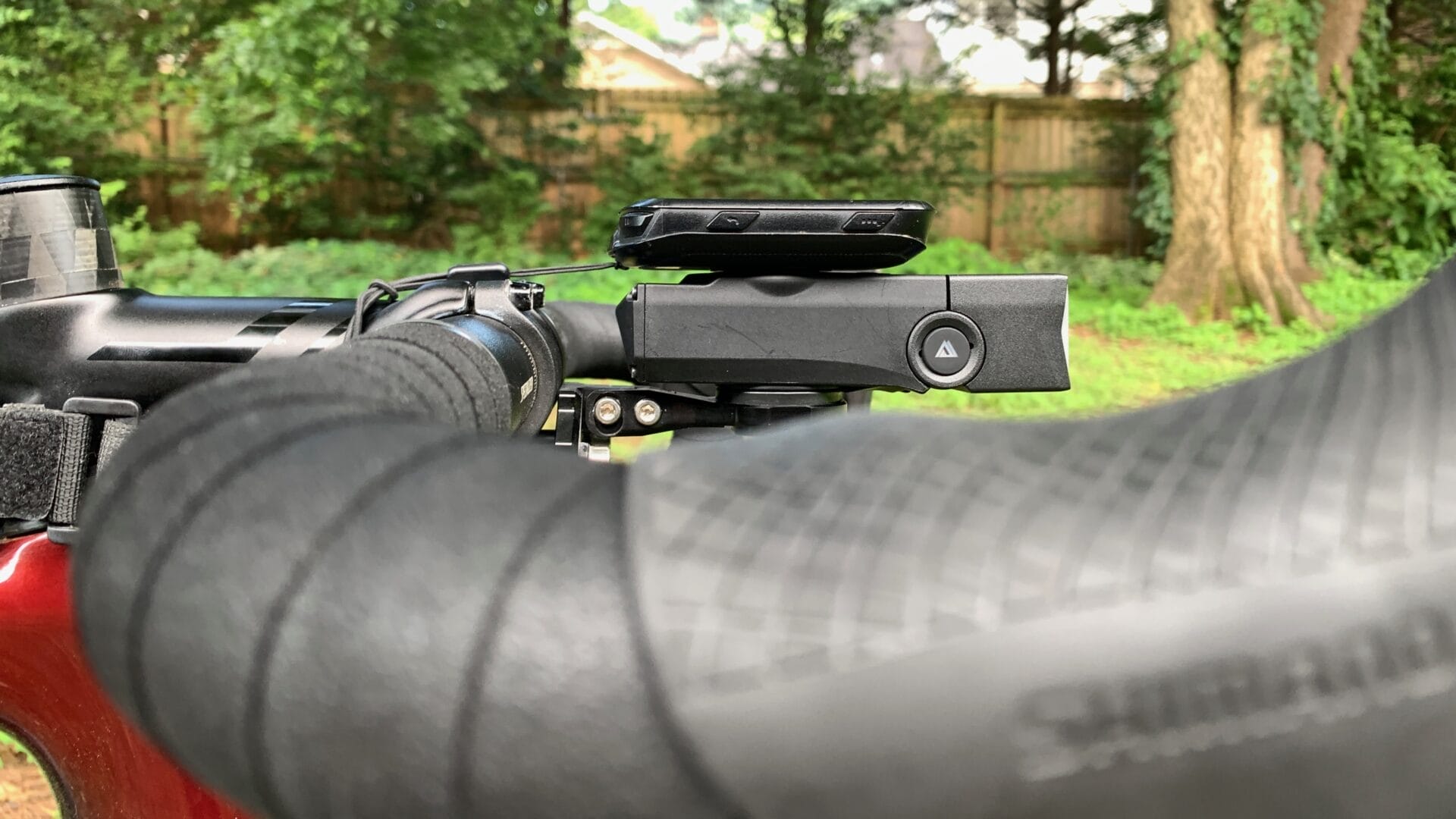
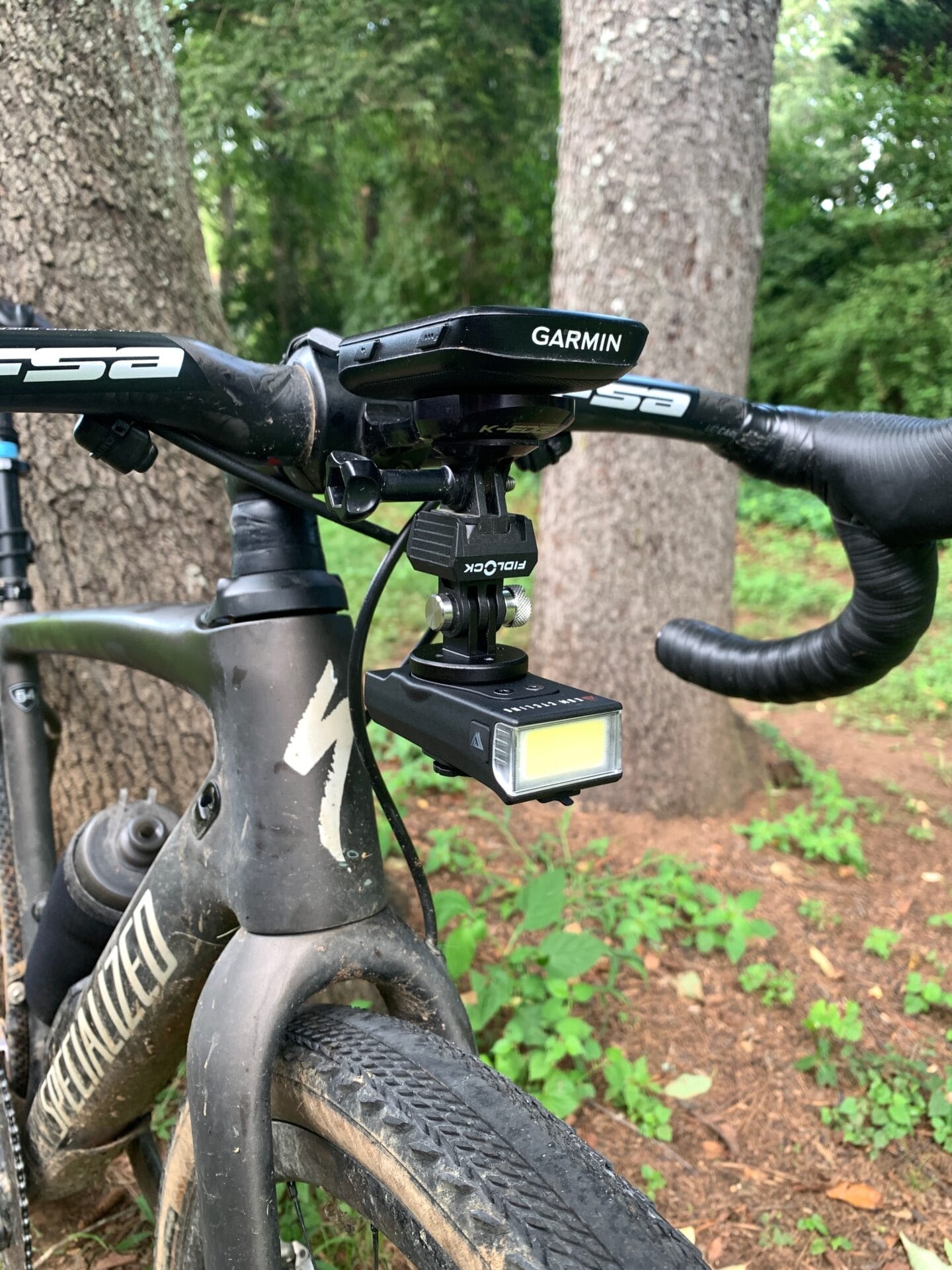
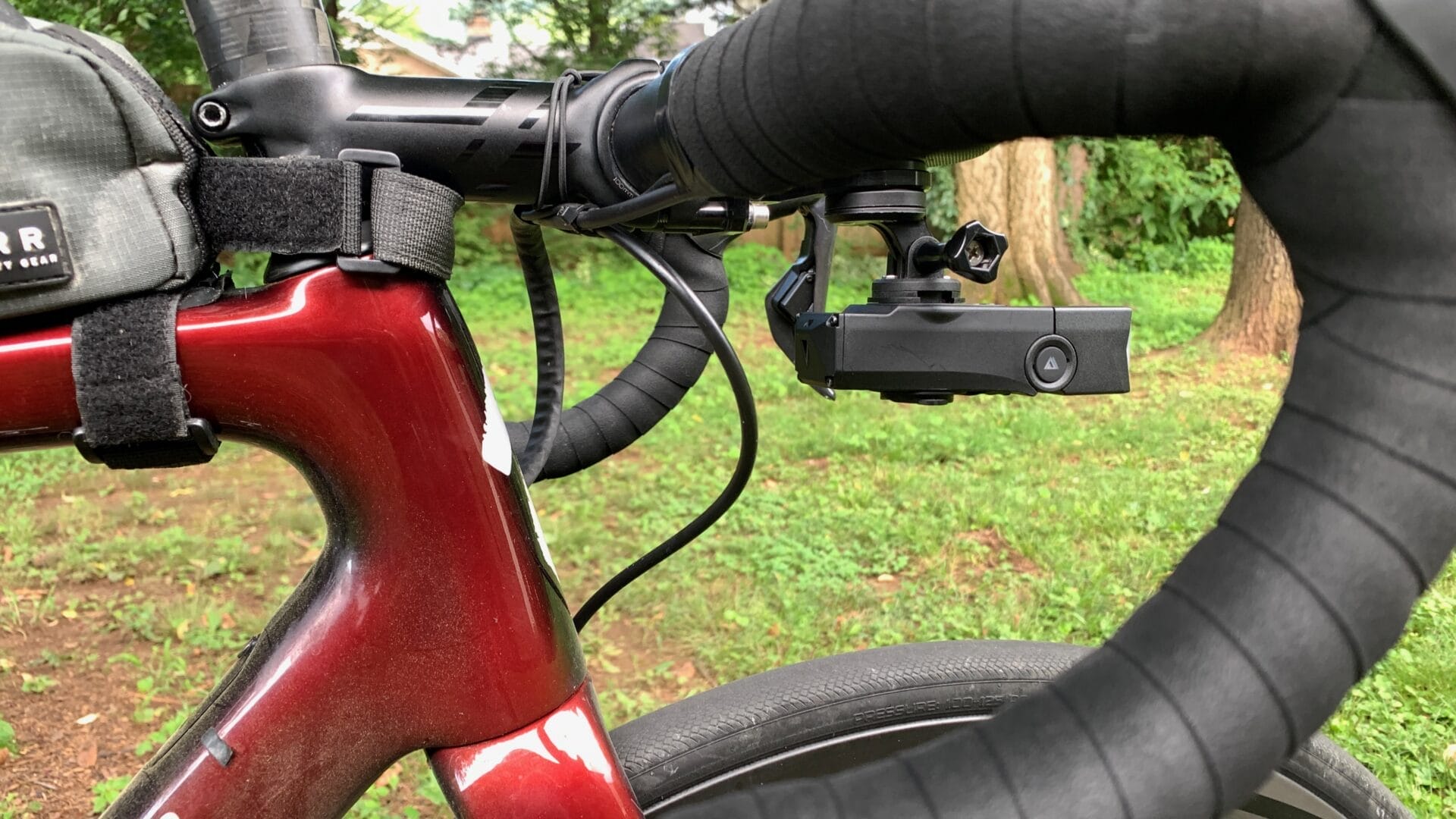
Mounting these lights is very simple. Place the light into the quarter-turn mount, ensuring the tabs are aligned correctly. Turn the device 90 degrees to lock. If using a Garmin or KOM Cycling out-front mount, the KOM Cycling Quick Release lights can be installed above or below the mount.
When the mount is installed on the top side, your cycling computer can be mounted on top of the light. If mounted below, a KOM Cycling Quick Release GoPro mount can be attached to the bottom side of the light.

Initial Thoughts
The design idea behind these lights is cool. KOM Cycling is leveraging their quick-release Garmin quarter-turn mounts for the design of this light. These lights allow for multiple mounting configurations, with the ability to mount above or below an out-front mount. However, this is not an original idea; Ravemen has the FR160, FR300, and FR500 that have been doing this for quite a while (similar in mounting style).
Copying someone is a good form of flattery (maybe Ravemen doesn’t think so).
Either way, KOM Cycling is taking a crack at cycling lights with the KOM Cycling Quick Release lights, and I am quite intrigued to see how they will perform.
The KOM Cycling Quick Release Light 350 lm is most like the Ravemen FR160 (see review) and FR300, whereas the 1000 lm is in a separate category.
Just by the looks of the light, the 1000 lm light is quite ugly; it is very boxy, slender, and long. It is a bit tall so when mounting a computer on the top side of the light, it will significantly raise the computer. Functionally, this is not necessarily an issue. The 350 lm has a much sleeker profile, much more pleasing to the eye, and won’t raise your computer as high.
Functionality-wise, mounting is very quick and easy, leveraging your existing mount.
The nice thing about these lights is that they come with Garmin and Wahoo discs and top plates, so most riders can use these lights. For riders using the Hammerhead quick-release mount, a GoPro combo mount and an additional adapter will be required (more below).
These lights provide typical flash modes and three brightness levels, so nothing revolutionary there. The biggest advantage these lights provide is their quick-release mounting.
Light Performance
Test Procedure/Setup
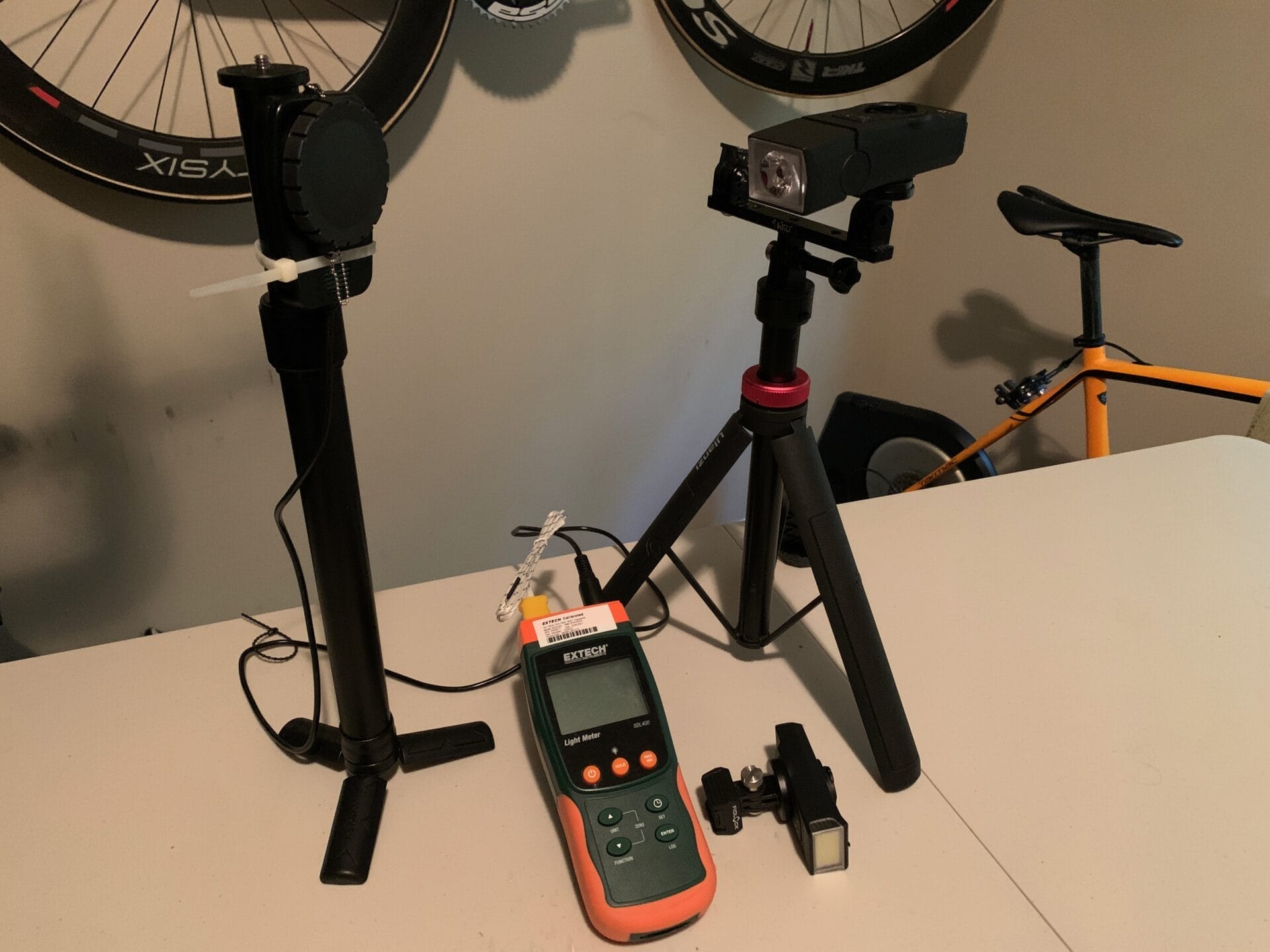
The light intensity is being measured with an Extech SDL400 light meter and datalogger. The lights and the light sensor are attached to various tripods that I already own and are held 1 m apart from each other. The datalogger is started, and the light is turned on and shone directly onto the sensor.
The test is conducted in a completely dark room with a fan running to ensure air is circulating over the light. The test runs continuously until the battery dies. The light is then recharged and retested for each steady light mode. For the flash mode, testing lasts about 1-2 hours.
Typically, flash modes are only for user visibility, so I’m not very concerned with the light intensity reduction overtime as much as the steady mode.
For the full test setup and the benefits for this test setup, check out Light Intensity Test Setup with Extech SDL400.
Test Results
This section is separated by the KOM Cycling Quick Release Light 1000 lm and 350 lm. Each light and steady mode was tested for intensity and duration. High flash mode was tested for about 1-2 hours just to get a sense of intensity drop. Each light is also compared to a different brand with a similar claimed lumen rating.
The combined comparison gives a look into how similar lights compare over time. Some lights may be brighter, but over a certain period, the brightness may drop off and not necessarily perform as well as a light with a lower claimed lumen rating.
Lastly, perceived light as a percentage (info from Lutron) is graphed and is formulated as:
Perceived Light (%) = 100 x sqrt(Measured Light (%)/100)
where Measured Light (%) is the Current Lux/Maximum Lux x 100. For the perceived light calculation, the max lux is used for all light modes. For comparing multiple lights, the max lux from the lights being compared is used. In other words, the perceived light comparison is relative to the brightest light being compared.
Using perceived light is quite interesting. From talking to Tom Place with Outbound Lighting, this is a good method to track how the light intensity changes in relation to the human eye and track that over time as the battery decays. Initially, when the light turns on, it will feel very bright, but as our eyes adjust, a light that is less bright will feel just as bright.
Using the perceived light, it can be seen that that intensity reduces much more than the perceived reduction. With some lights, as the light intensity reduces, even with the battery draining, they can maintain close to 100% perceived light for a significant amount of time. Some lights leverage this principle of perceived light and reduce the intensity gradually to extend battery runtime.

1000 lm
The KOM Cycling Quick Release Light 1000 lm hit all the claimed run times. For each steady mode, the light ran just slightly beyond the claimed life. This should guarantee claimed runtimes for quite some time, even as the battery degrades from use.
Interestingly, the light has a high initial output, then quickly declines. After the large initial decline in intensity, the light output remains quite steady. Unfortunately, this high initial output probably skews the 1000-lumen light claim.

In the Low Flash mode, the light follows a similar trend as the steady mode. It has a high initial light intensity output, the drops significantly. Afterwards, it makes a steady decline in light intensity output.

My assumption is that this light has a 1000-lumen output, which I cannot verify, but I can compare it to other light with similarly claimed outputs. In the following graph, I am comparing two other similar lights. C2 is a light with a 1000-lumen claimed output, and C1 has a 1200-lumen claimed output.
C2 has a much smaller battery, whereas C1 has a larger one than the KOM Cycling Quick Release Light 1000 lm. Even with these differences, I would assume that they would have relatively similar lux readings (at least initially anyways), and ideally, have a similar behavior over time.
Comparing to some similar lights. The KOM Cycling Quick Release Light performs well in that it provides for slightly over 2 hours of runtime. But it drops over 5000 lux from the initial output. Comparing to C2, after about 10 minutes, C2 is more intense and remains so for the next 45 minutes.
C1, even with its higher lumen rating, has a lower initial lux reading, but doesn’t really begin losing intensity until around 45 minutes. C1 performed significantly better until a little before 2 hours, then made a large drop but stayed on for approximately 20 minutes longer.
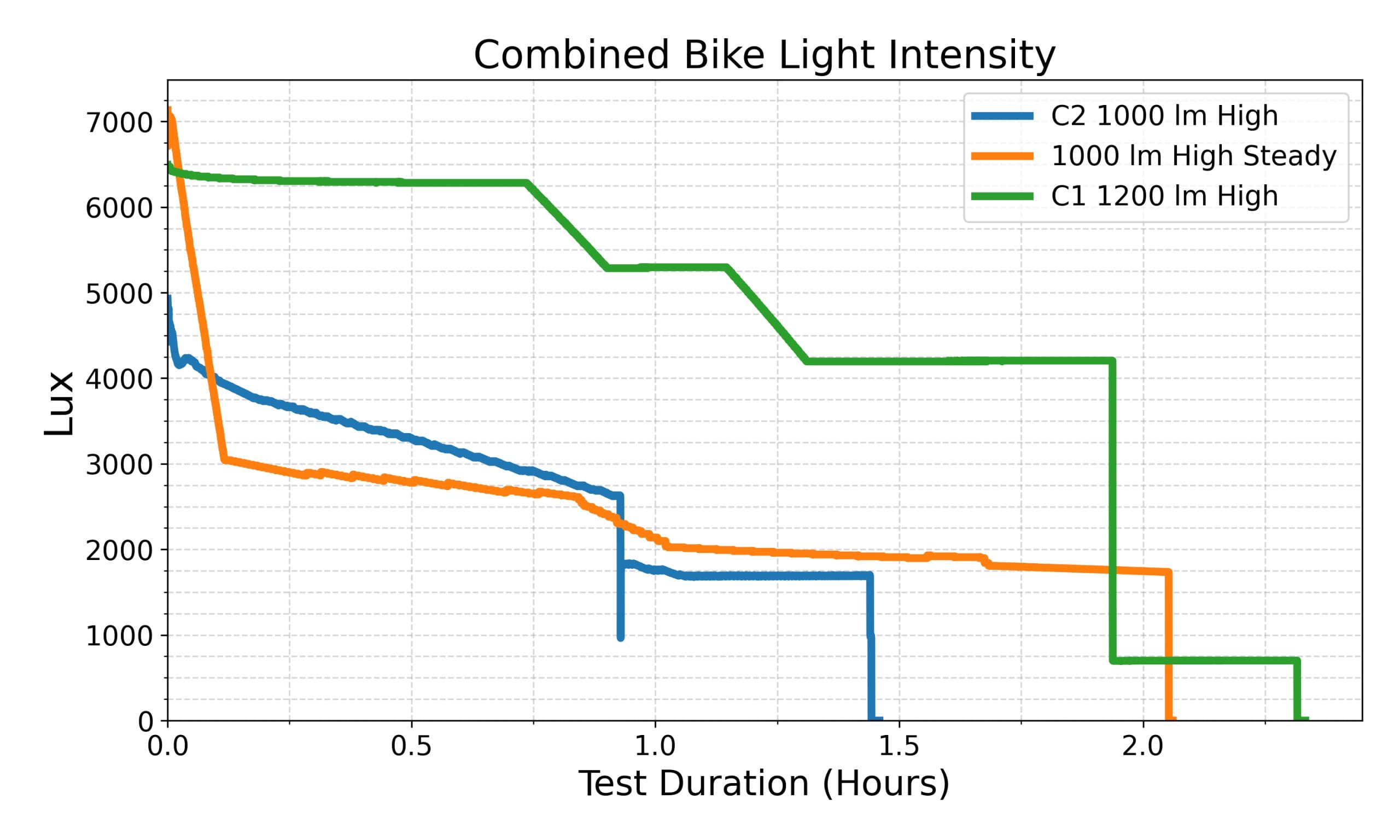
High light mode comparison between KOM Cycling Quick Release Light 1000 lm and two other similar lights.
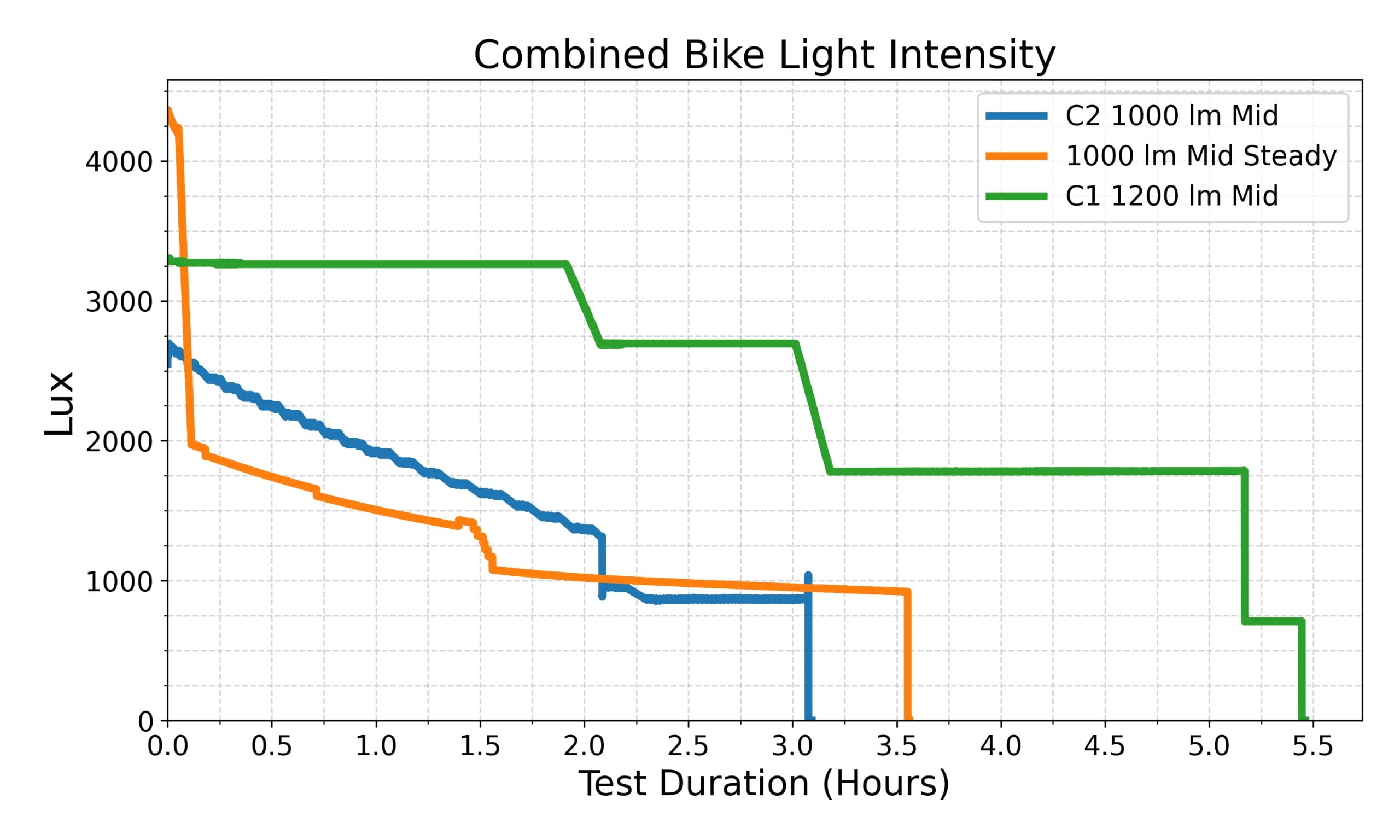
Medium light mode comparison between KOM Cycling Quick Release Light 1000 lm and two other similar lights.
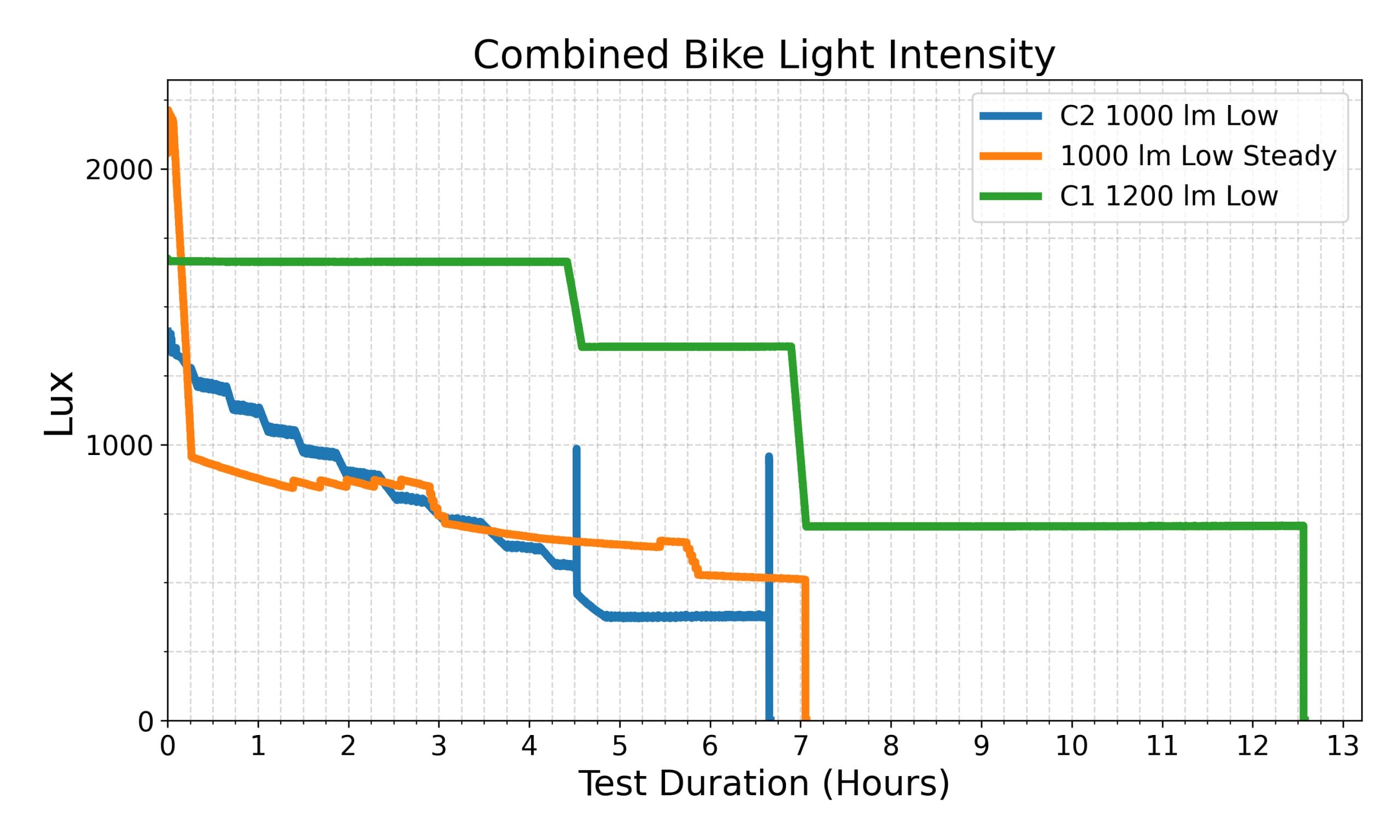
Low light mode comparison between KOM Cycling Quick Release Light 1000 lm and two other similar lights.
This last comparison is the perceived light. First, a comparison of the KOM Cycling Quick Release Light 1000 lm and its three steady modes. As mentioned, the lights are essentially normalized to the brightest recorded lumen value.
The Perceived Light plot lines will follow the same trend as the Light Intensity plot, but the decrease in light intensity isn’t so drastic as the decrease in perceived light. Unfortunately, the way the KOM Cycling Quick Release Light 1000 lm is designed, it has a huge initial decrease in intensity, thus making the final perceived value seem like huge decline.
The High Steady and Mid Steady modes have about a 45% decrease in perceived light, and Low Steady has about a 30% decrease. I think this happens when light companies focus strictly on lumen values and not performance over time.

Next, comparing the perceived light of C1 and C2 lights with the KOM Cycling Quick Release Light 1000 lm. The 1000 lm light way under performs C1 and only has a small period near the end of the life cycle that it is brighter. It doesn’t last as long as C1, but it also has a smaller battery.
The KOM Cycling Quick Release Light 1000 lm also under performs in intensity compared to light C2. The 1000 lm is initially much brighter than the C2, but quickly declines. After around 8 minutes, the lights have the same perceived light percentage, then remains 5-10% lower than C2.
For having a larger battery, the KOM Cycling Quick Release Light 1000 lm doesn’t perform quite as well as C2 and significantly underperforms compared to C1.

KOM Cycling Quick Release Light 1000 lm on compared to C1 and C2 all on high mode.

KOM Cycling Quick Release Light 1000 lm on compared to C1 and C2 all on Medium mode.
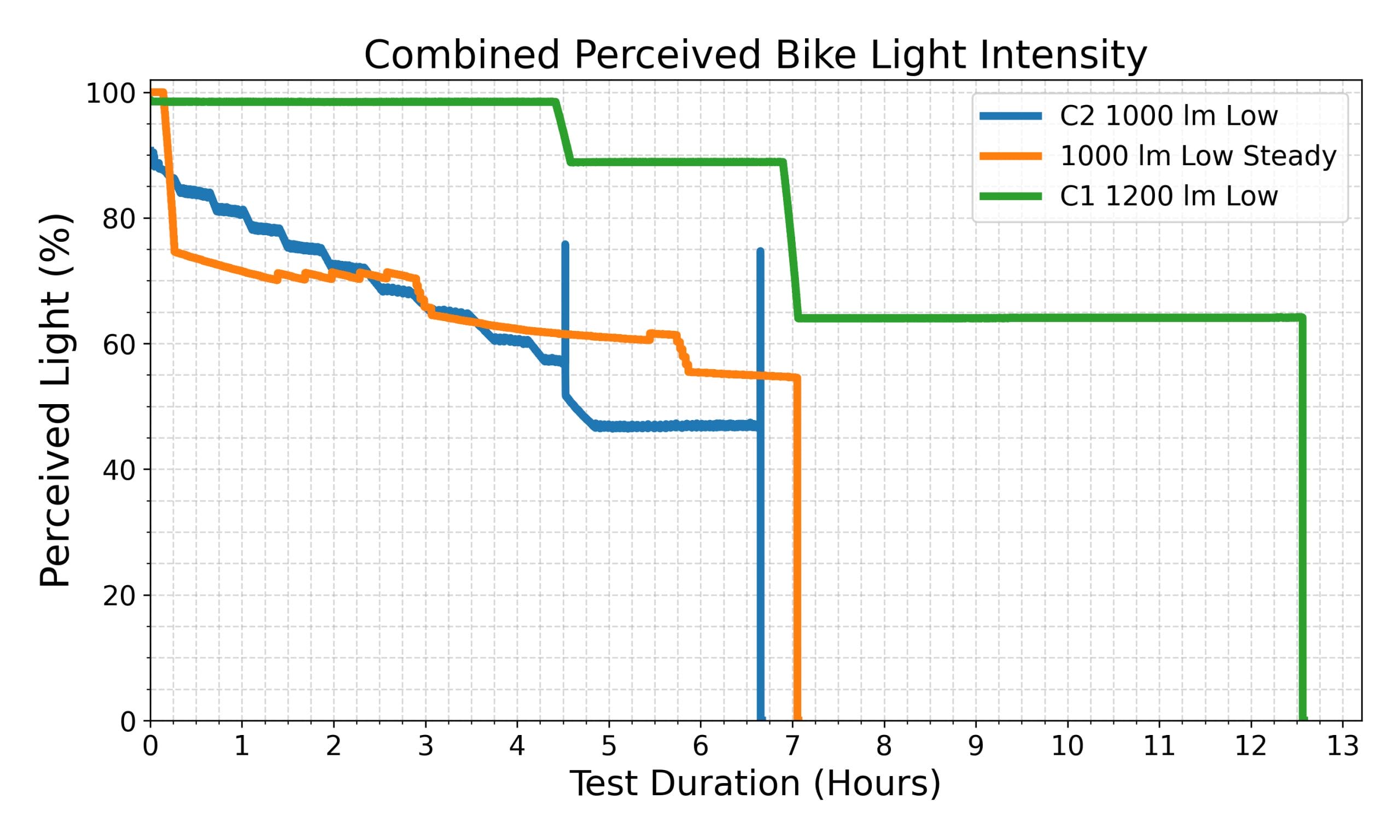
KOM Cycling Quick Release Light 1000 lm on compared to C1 and C2 all on Low mode.
350 lm
As mentioned, the KOM Cycling Quick Release Light 350 lm is more of a blinky light intended for rider visibility. It is my belief that this is why the first light mode when turning the light on is a flashing mode. Even though this light isn’t really intended (despite KOM Cycling’s claims) for lighting the way at night, I will still be testing its intensity.
The KOM Cycling Quick Release Light 350 lm uses a panel of LEDs, unlike the single large LED light the 1000 lm light. This is why the 350 lm light doesn’t really have a main hot spot or focused part of the beam. The beam spreads out quite far after just a few feet away from the light.
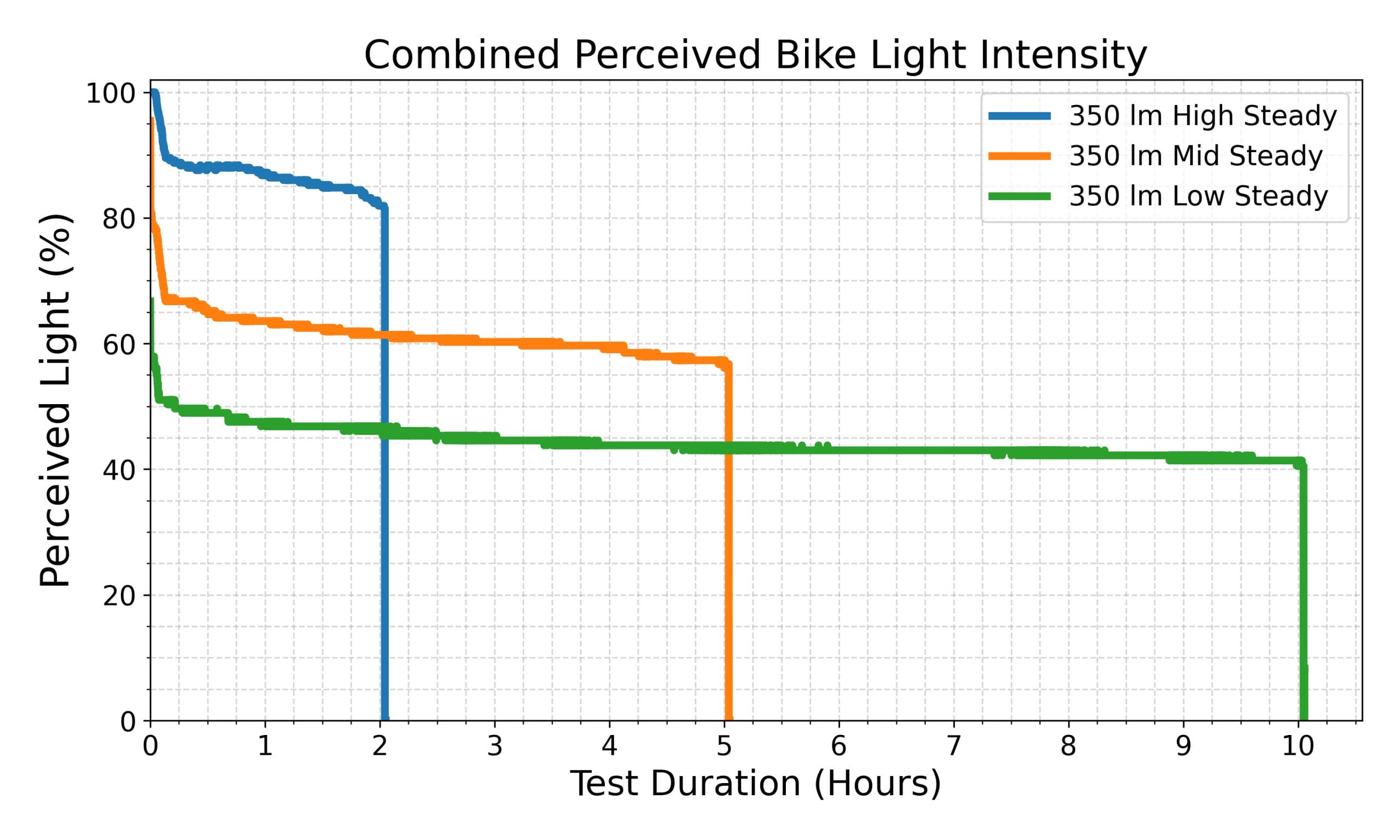
As with the 1000 lm light, the KOM Cycling Quick Release Light 350 lm slightly exceeded all the claimed steady mode runtimes. Interestingly, the 350 lm light performs very similarly to the 1000 lm light. It has a high initial output, then drops off significantly. The 350 lm light doesn’t decline as much after that initial drop-off compared to the 1000 lm.
The 350 lm light provides a lot less lux at 1 m than the 1000 lm light. The lowest light mode for the 1000 lm light is around 1000 lux, whereas the 350 lm light is only 120 lux.

I don’t have any lights that are like the 350 lm light, so I won’t be doing a combined comparison. The key thing about this type of light is how visible is the light from a certain distance away, so that people in vehicles can notice you more easily.
The KOM Cycling Quick Release Light 350 lm provides plenty of light to make you visible, especially when the light is in High Flash. The other two flash modes are not quite as bright, but the flashing patterns provide good visibility.
Since most people probably won’t be using this light as their main light source when riding at night, the Perceived Light graph isn’t extremely useful, especially since the light spreads out immediately once it leaves the device. In a pinch, this light will get you home, but it doesn’t really provide light a far distance in front of you, so a slower speed when using this light is advisable.
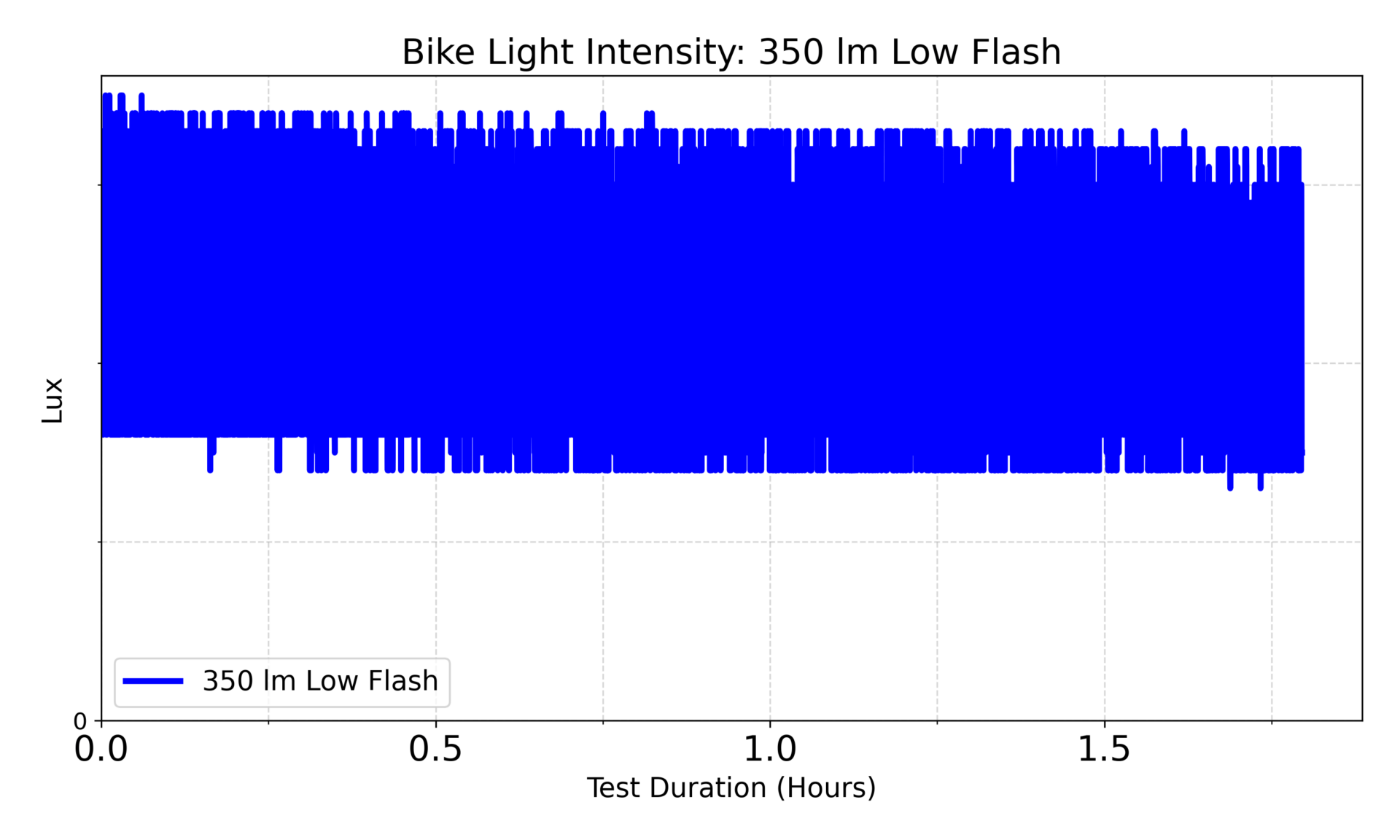
In the flash mode, the 350 lm light only reduced intensity slight after about a little over an hour and a half.
After the initial drop in light intensity, the perceived light remains relatively flat. This is good because, during the entire life cycle of the charge, your eyes won’t notice the light dimming.
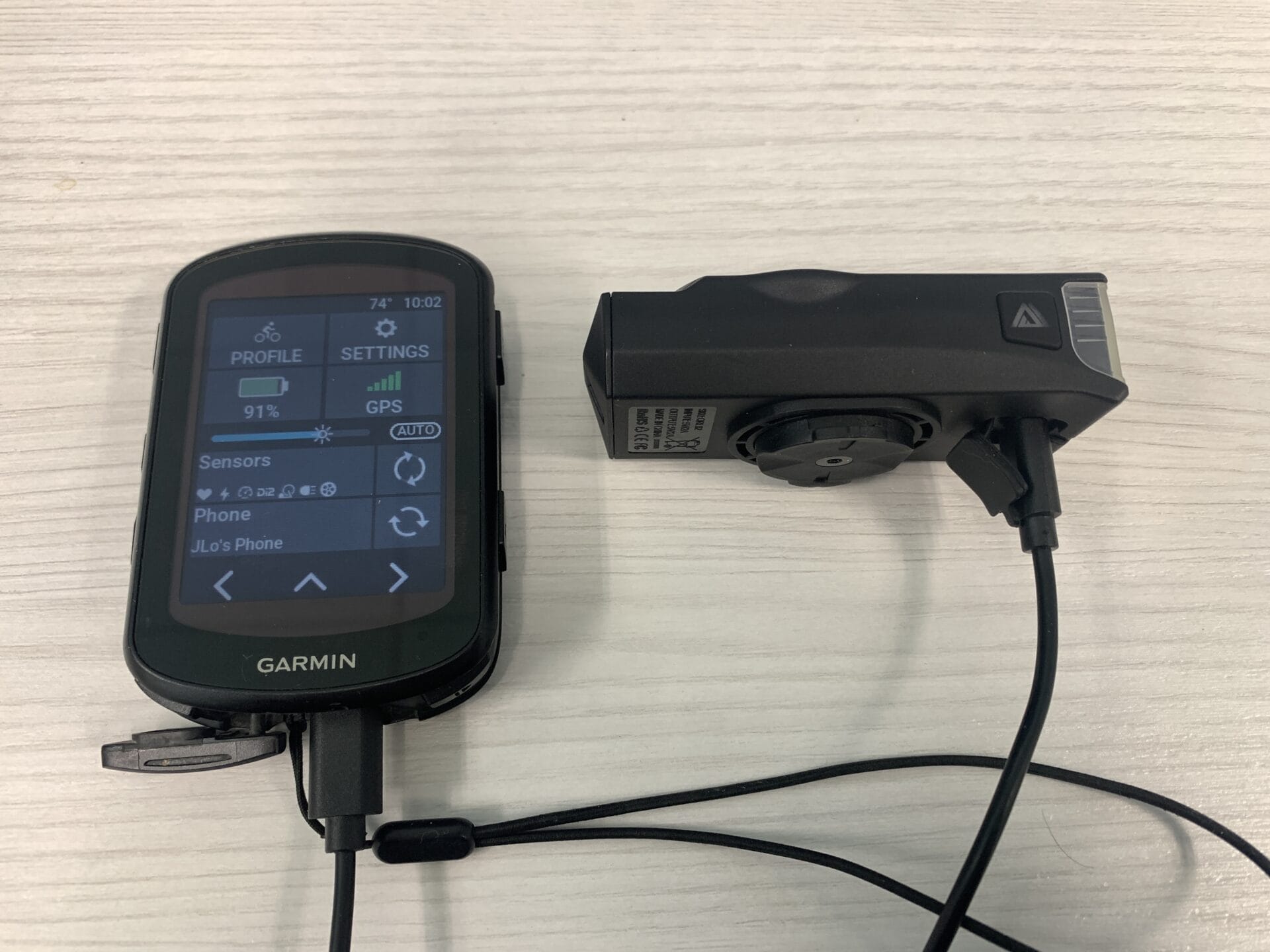
The KOM Cycling Quick Release Light 350 lm has a cool feature that allows for discharging or charging other devices. To test this feature, I plugged in my well-drained Garmin Edge 840 Solar that was at 6% battery. After about 2 hours, the charging stopped and brought the device up to 91%, and it wouldn’t get it any higher.
Unsure of how much battery was left of the 350 lm light, I ran the light test again. Though the light intensity was slightly higher than the first test, the battery only had 45 minutes of charge. This one discharge took almost 1.5 hours of battery life for the High Steady mode or about 60% of the battery life.
If the device is mainly used on flash mode, it will last quite a while even after discharging, but using the device as a power bank really eats up most of the battery. This should probably only be used for emergency situations and not really to top off the battery of the second device.
Note, that the KOM Cycling Quick Release Light 350 lm isn’t meant for charging large devices light smartphones.


Limitations of this test
This test doesn’t consider the beam spread or throw. Thus, a light with a compact beam could perform very well in the light intensity testing, but not be very useful for cycling. Fortunately, both C1 and C2 lights are designed for cycling and provide good lighting for cycling.
Beam Spread and Throw
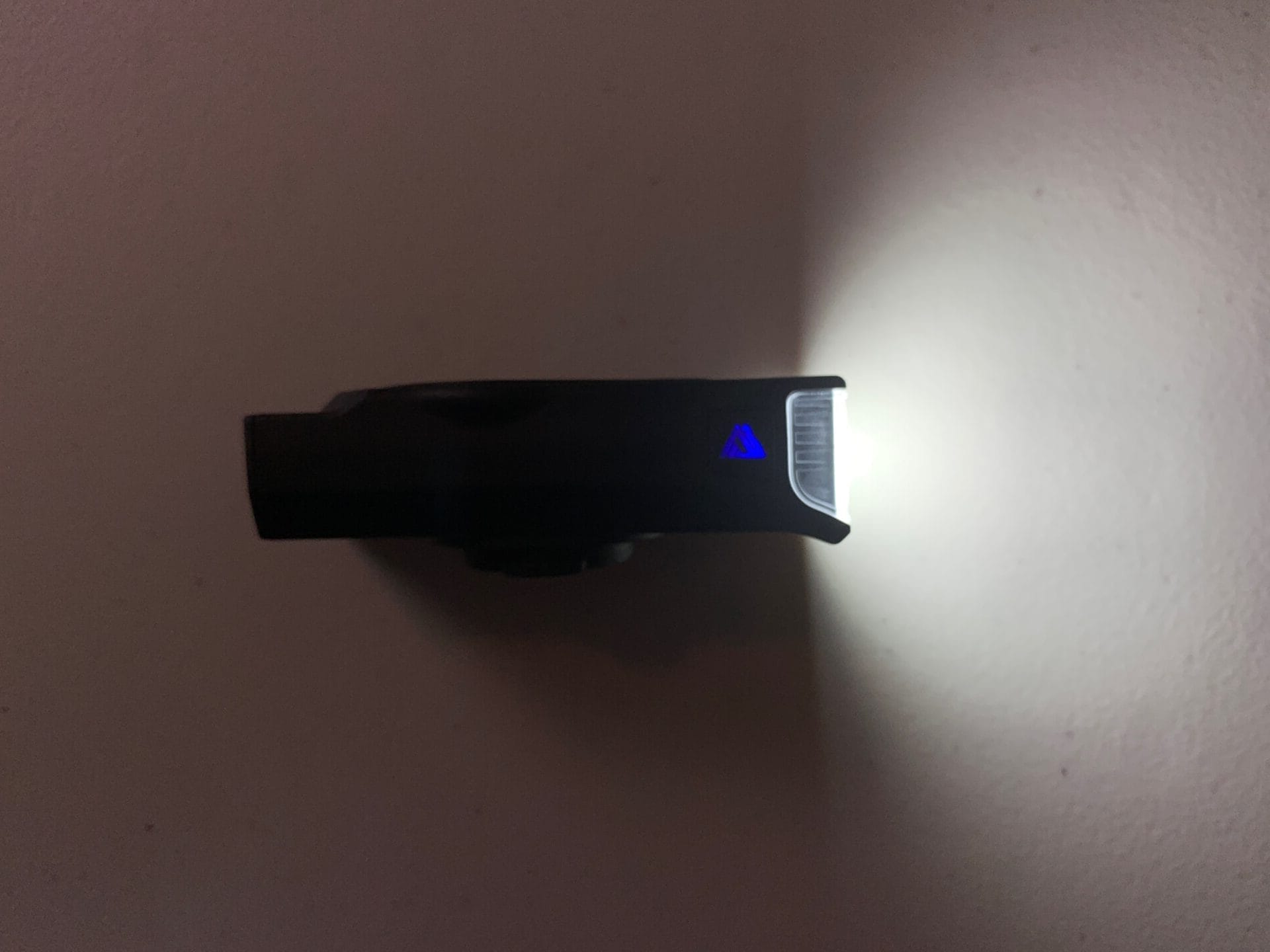
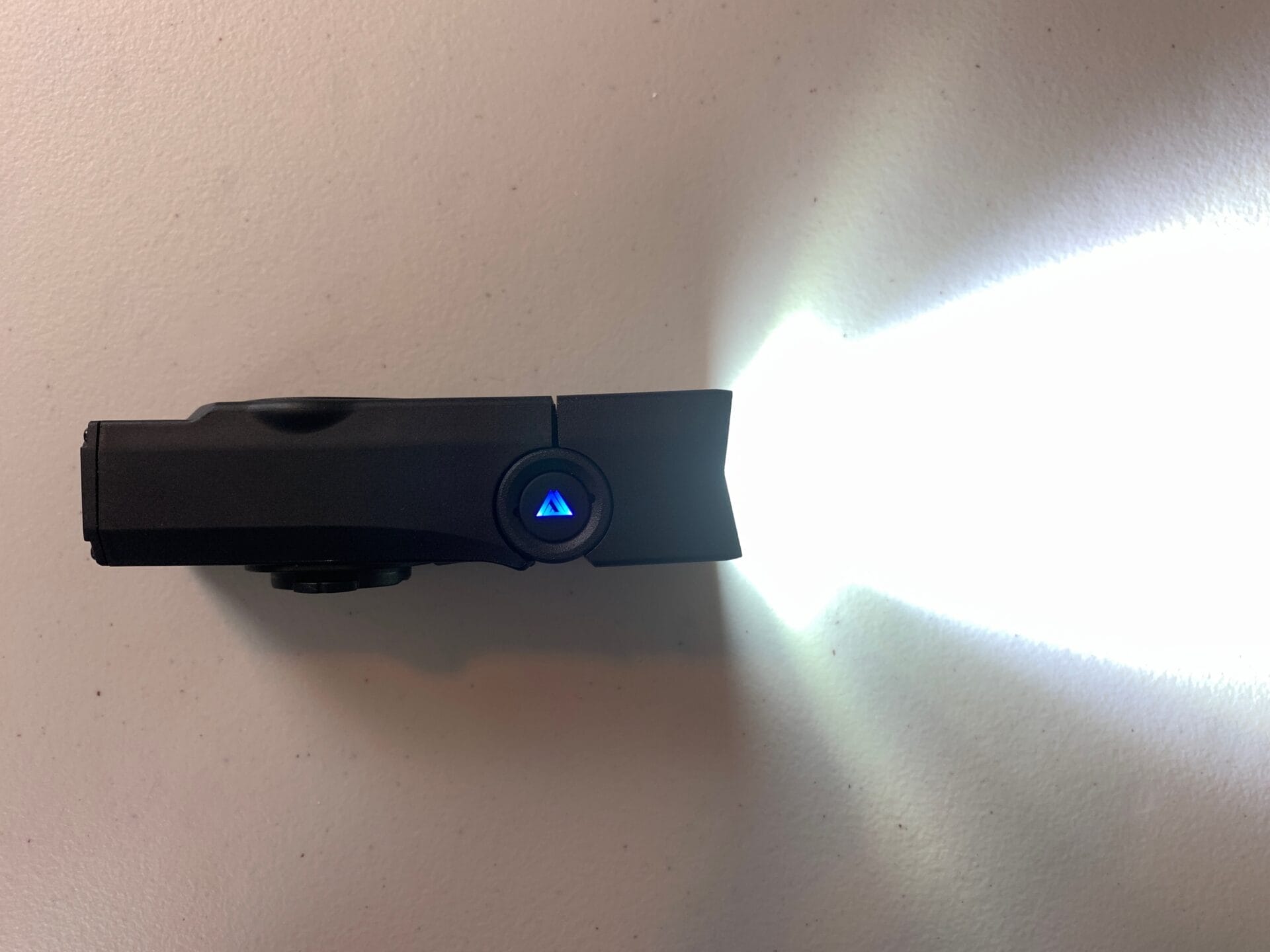
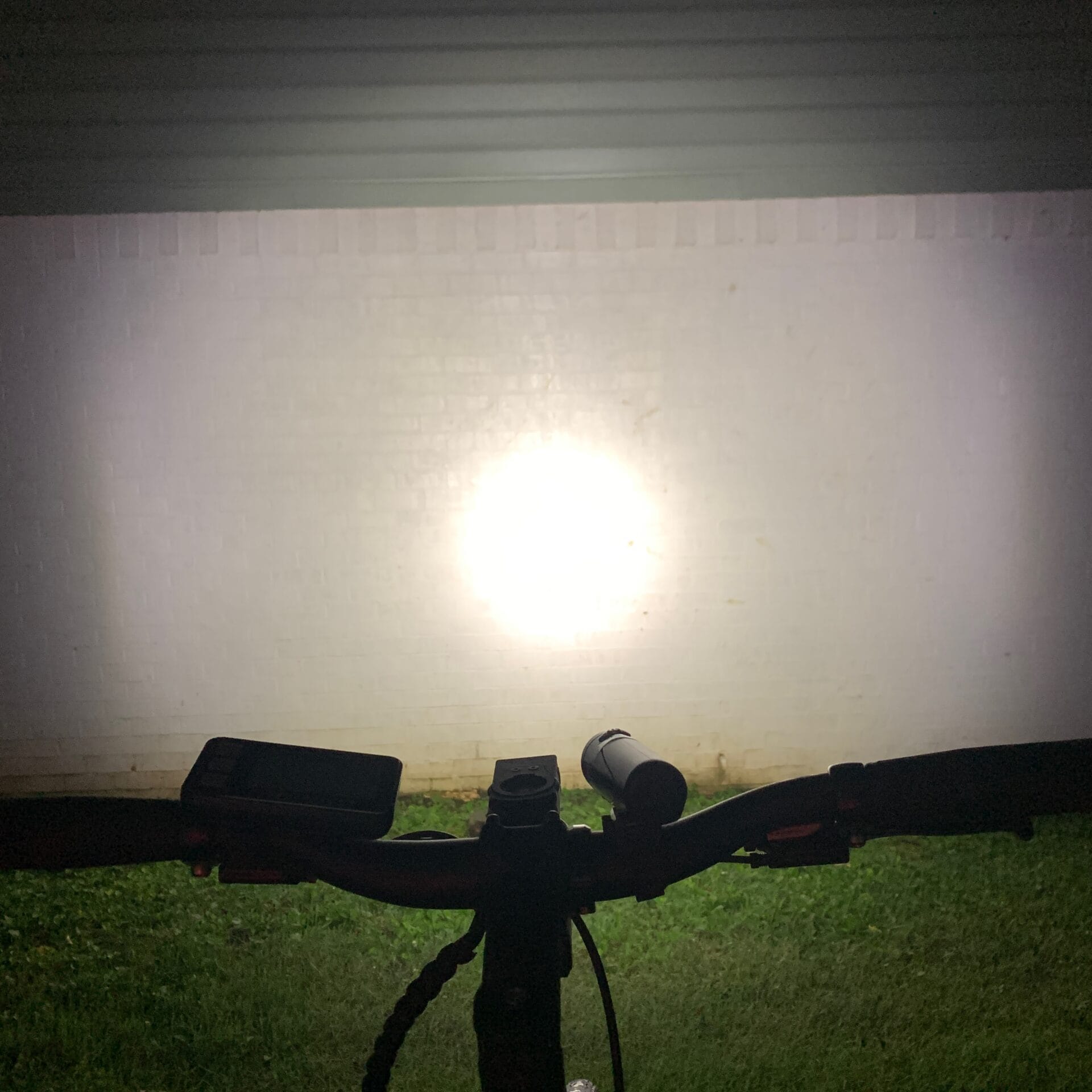
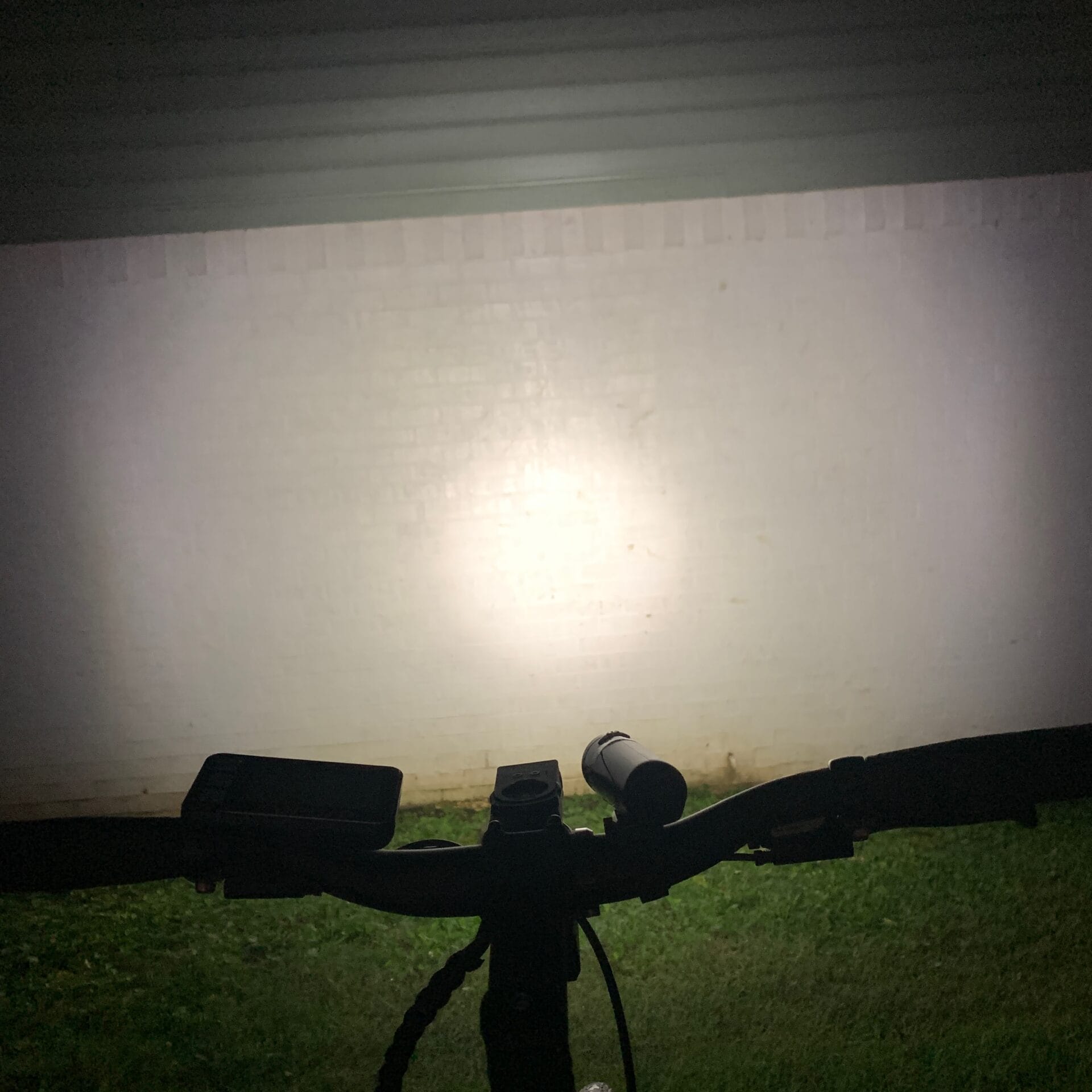
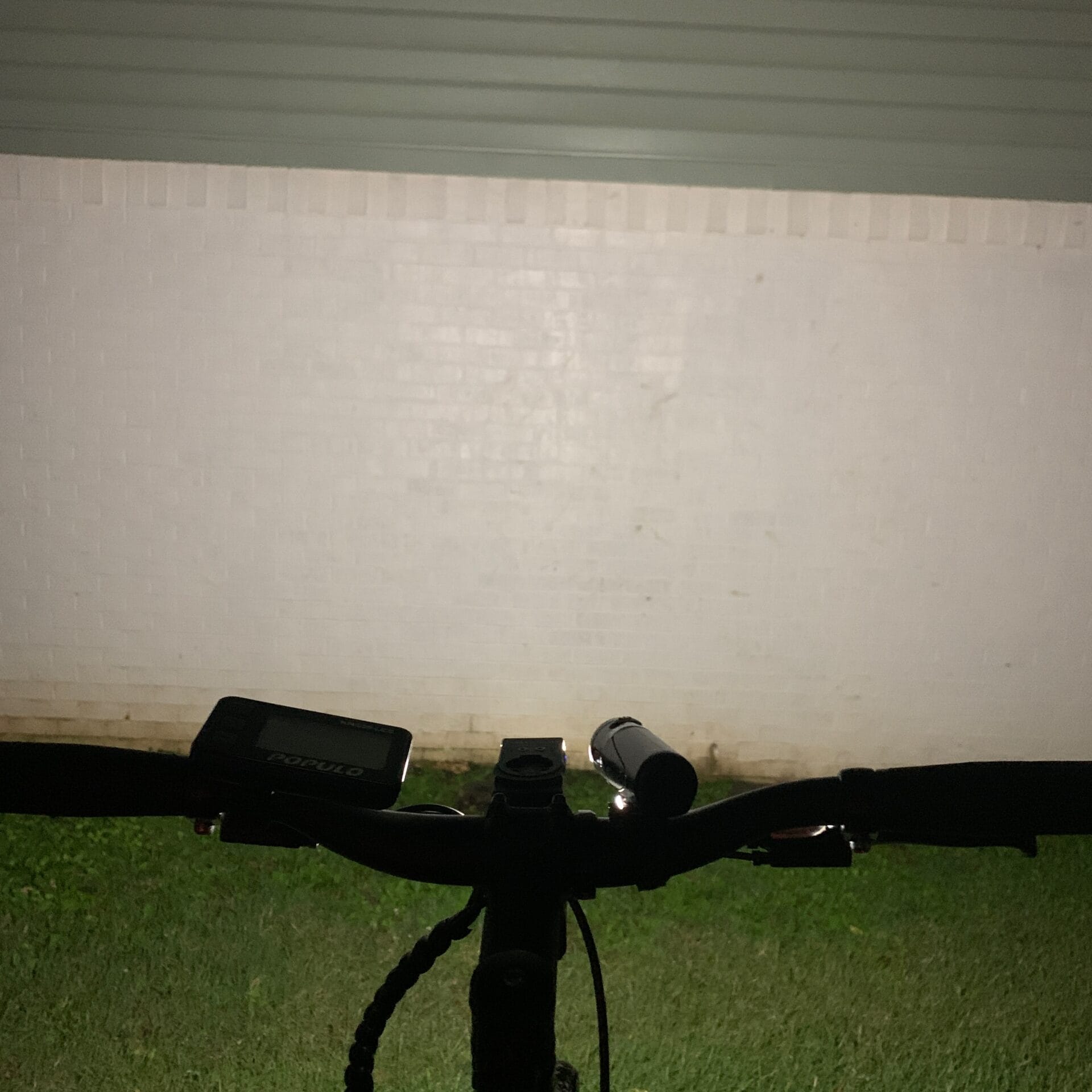
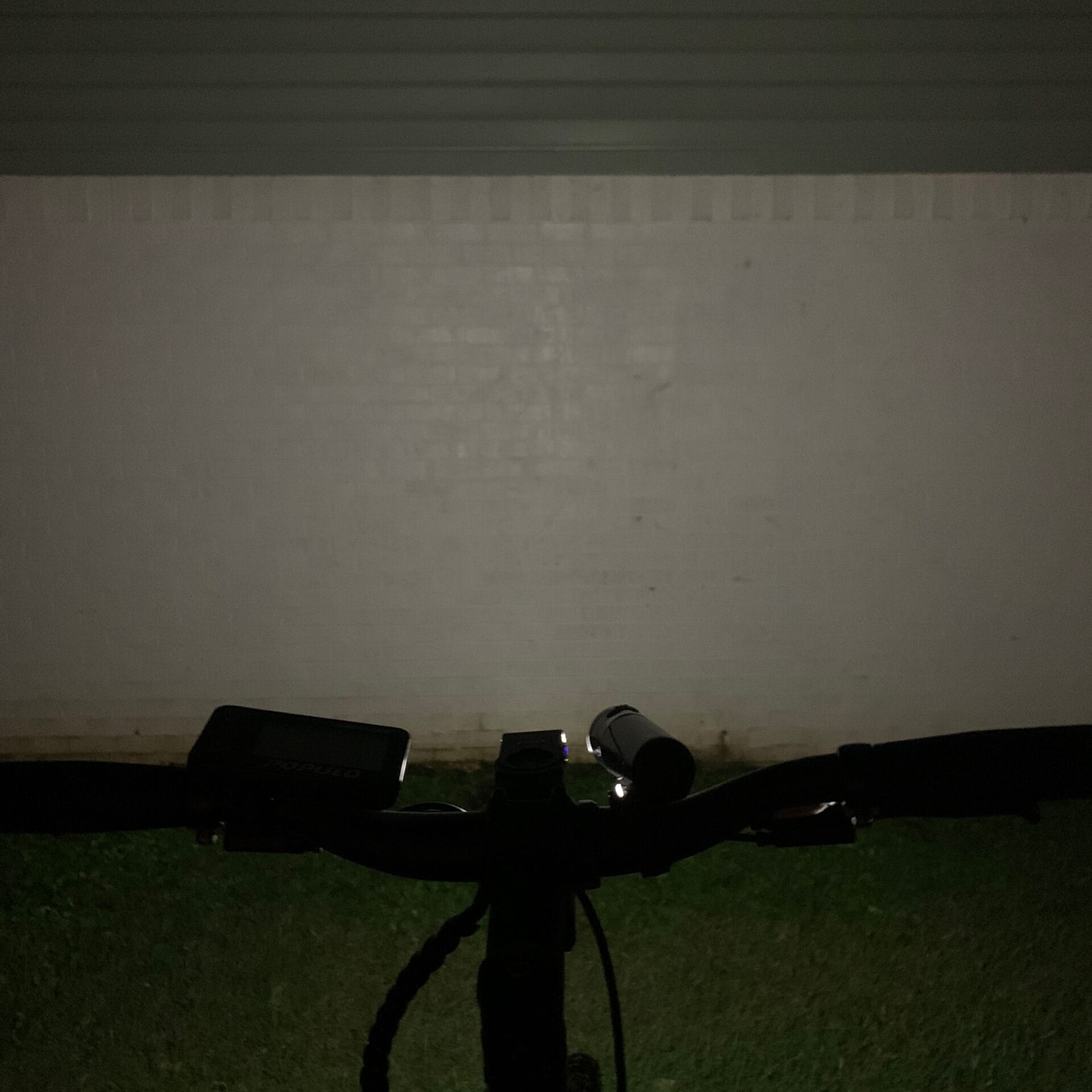
To evaluate the KOM Cycling Quick Release Lights’ beam spread (how wide the light spreads) and throw (how far it projects), I conducted on-bike tests in a dark, rural environment, supplemented by wall projections at 3 meters. Unlike my Extech SDL400 intensity tests, which focused on lux at 1 meter, these observations assess real-world usability for cycling.
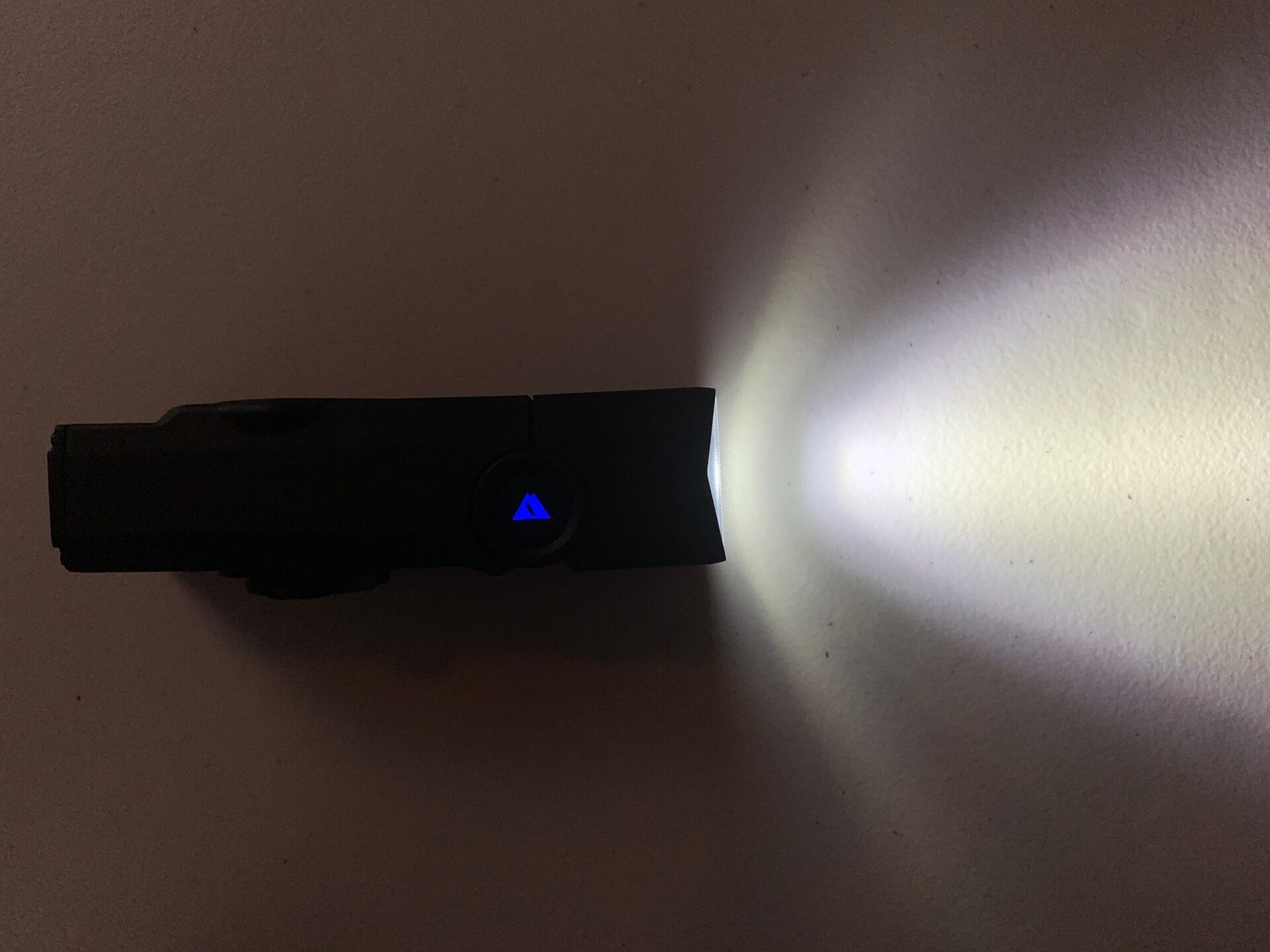
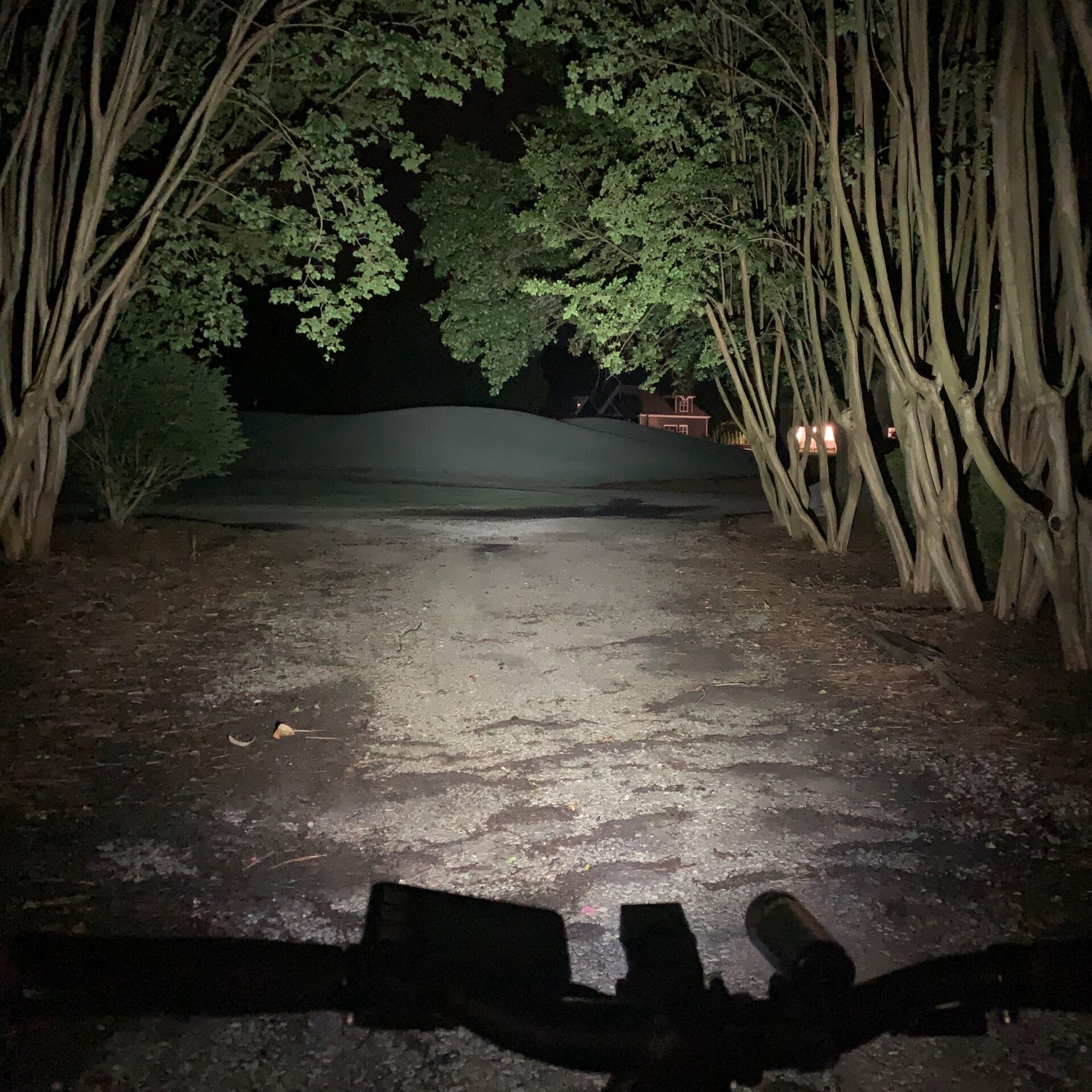
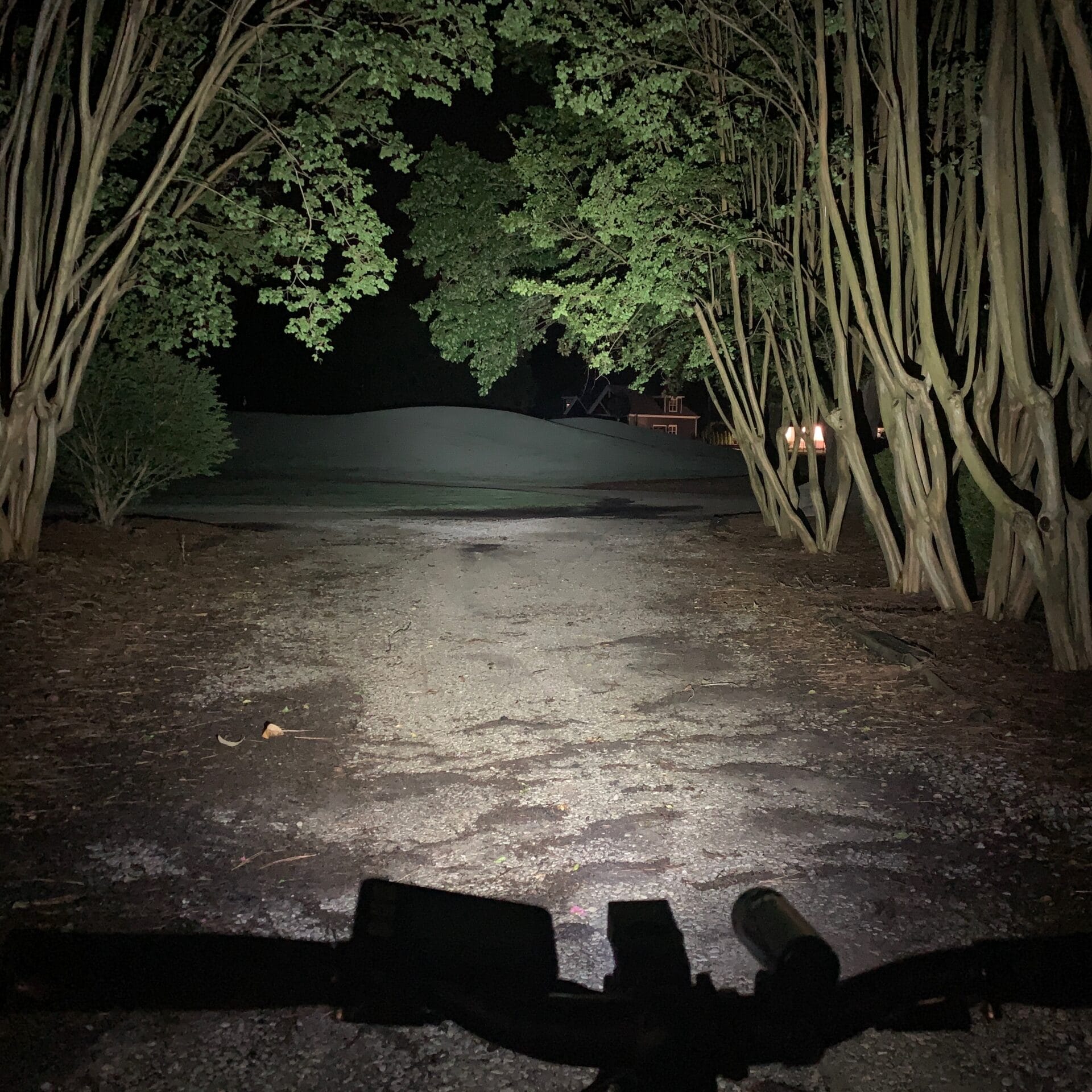
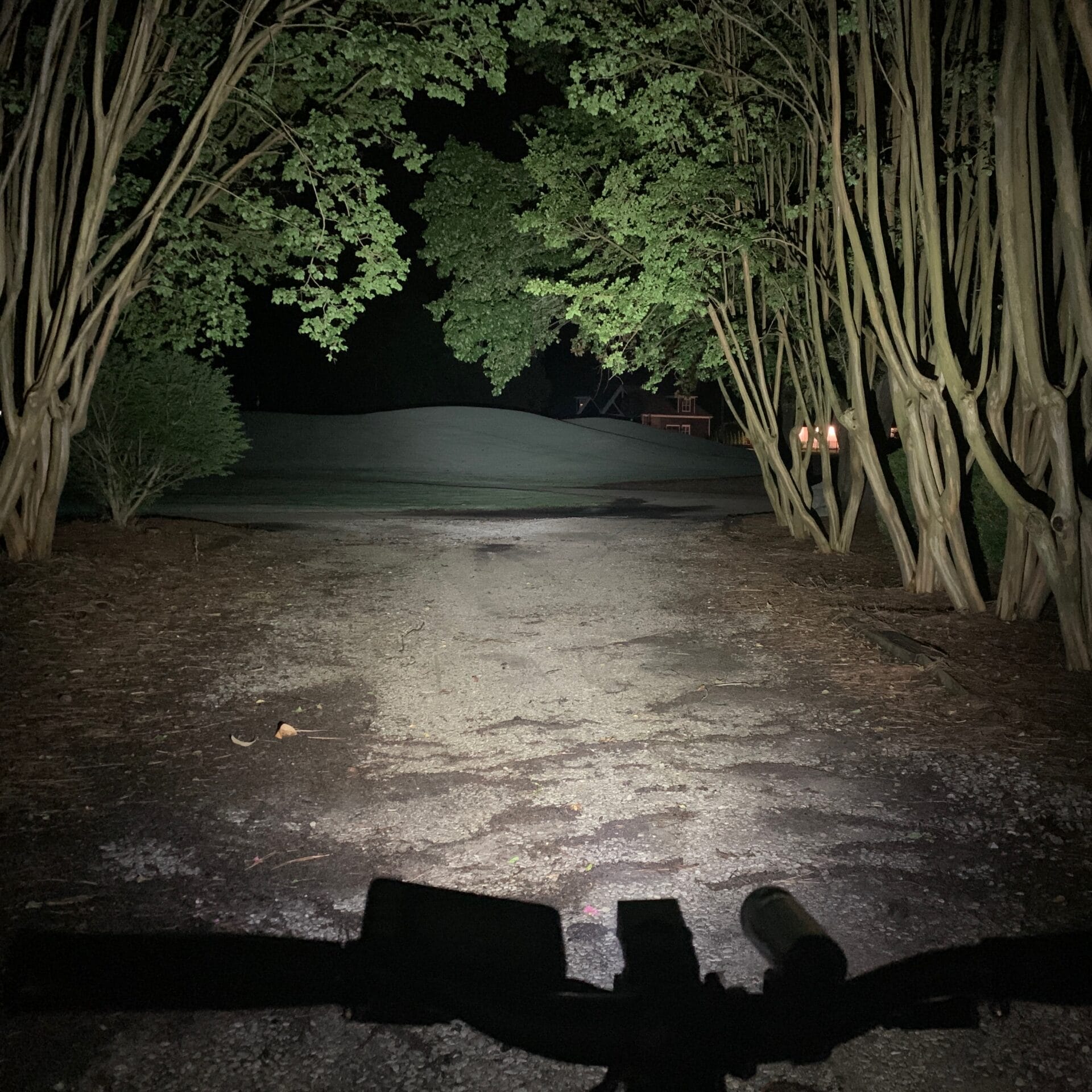
The 1000 lm light, with its single LED, produces a medium-width beam with a distinct central hotspot and moderate spill. At high steady mode (1000 lumens), it throws light about 25 meters, sufficient for road cycling at higher speeds. On low steady (300 lumens), the throw is still quite far, and from the images of the open field, it is hard to distinguish between the different modes.
The low steady mode is still usable for commuting and ideal for slower speeds. The images were taken with a fresh battery and thus before the intensity drop-off noted my tests. The spread on 1000 lm light is very far and wide. The light has a circular pattern with a circular hotspot.
The pattern doesn’t have a cut-off at the top of the light which shines an excessive amount of light in areas it isn’t needed. Also, the light will shine in the face of oncoming traffic too. I was surprised at the initial brightness of the light, but it fades quickly.
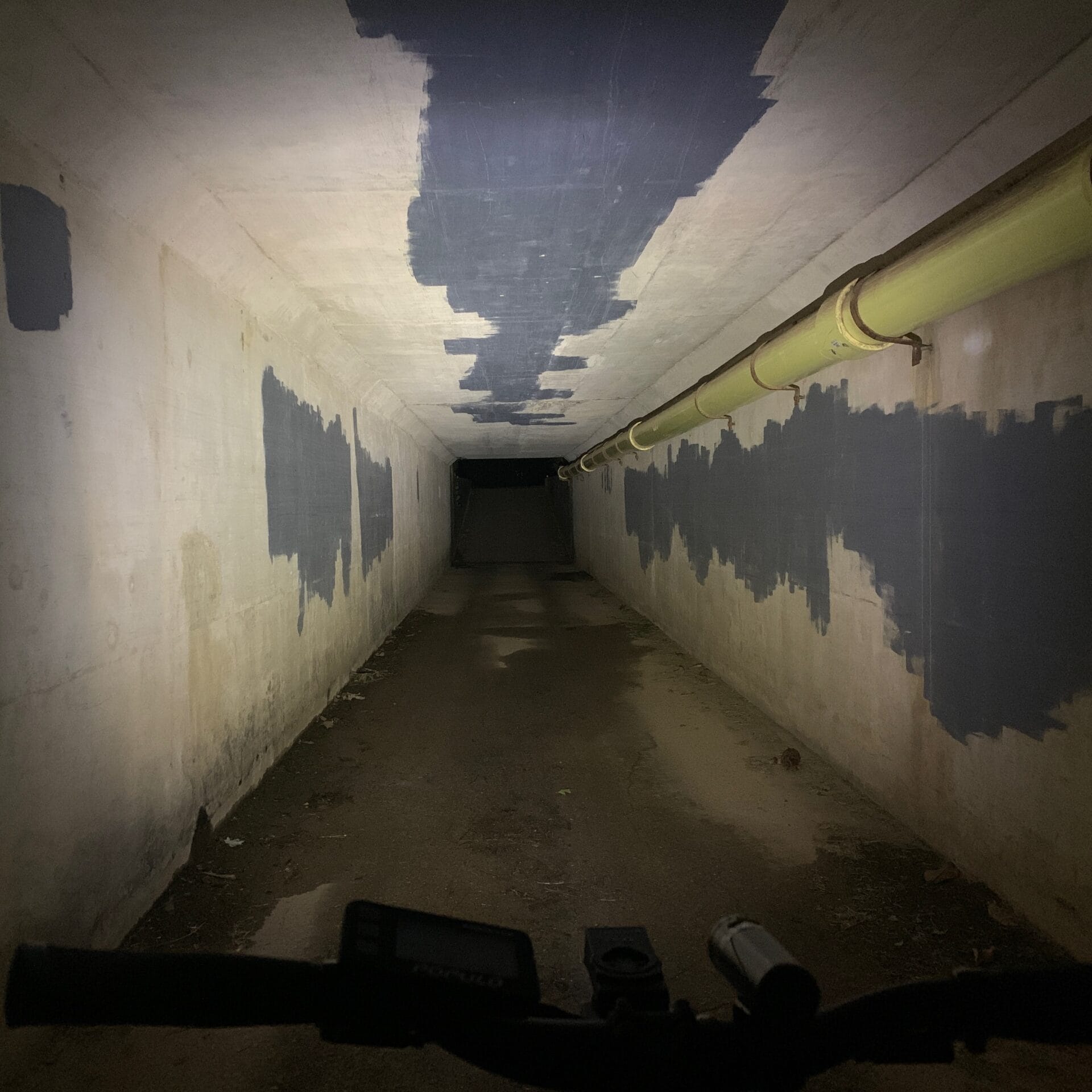
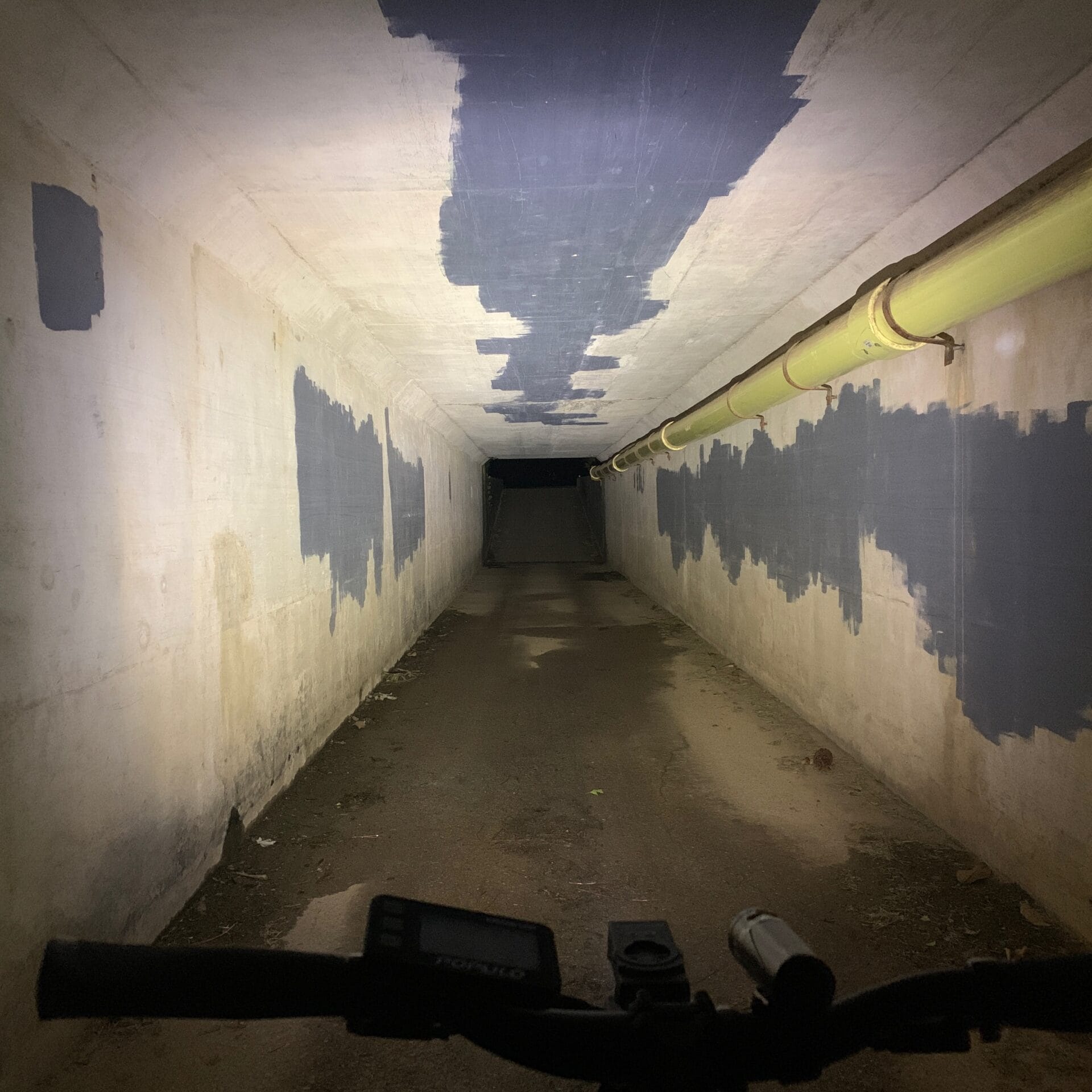
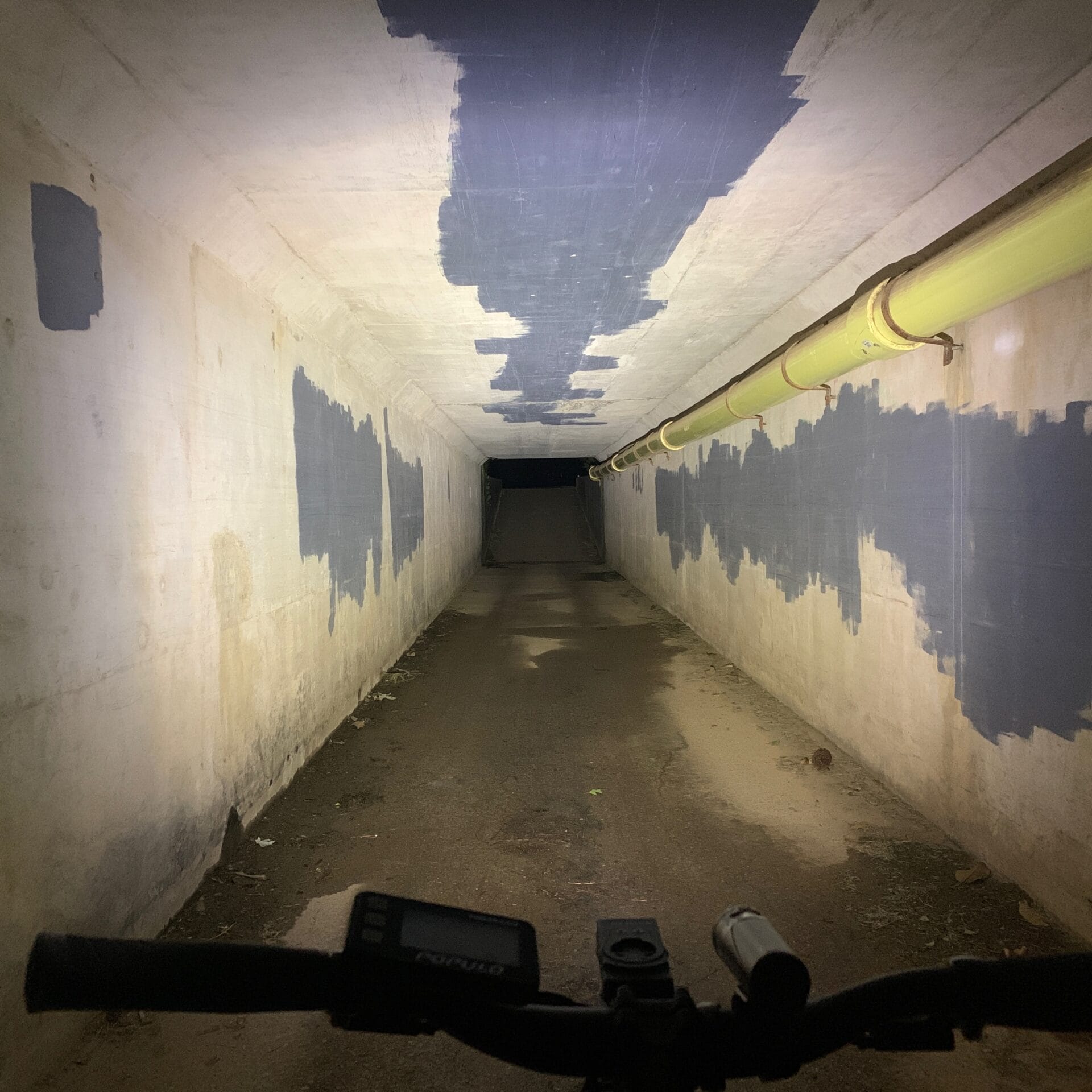
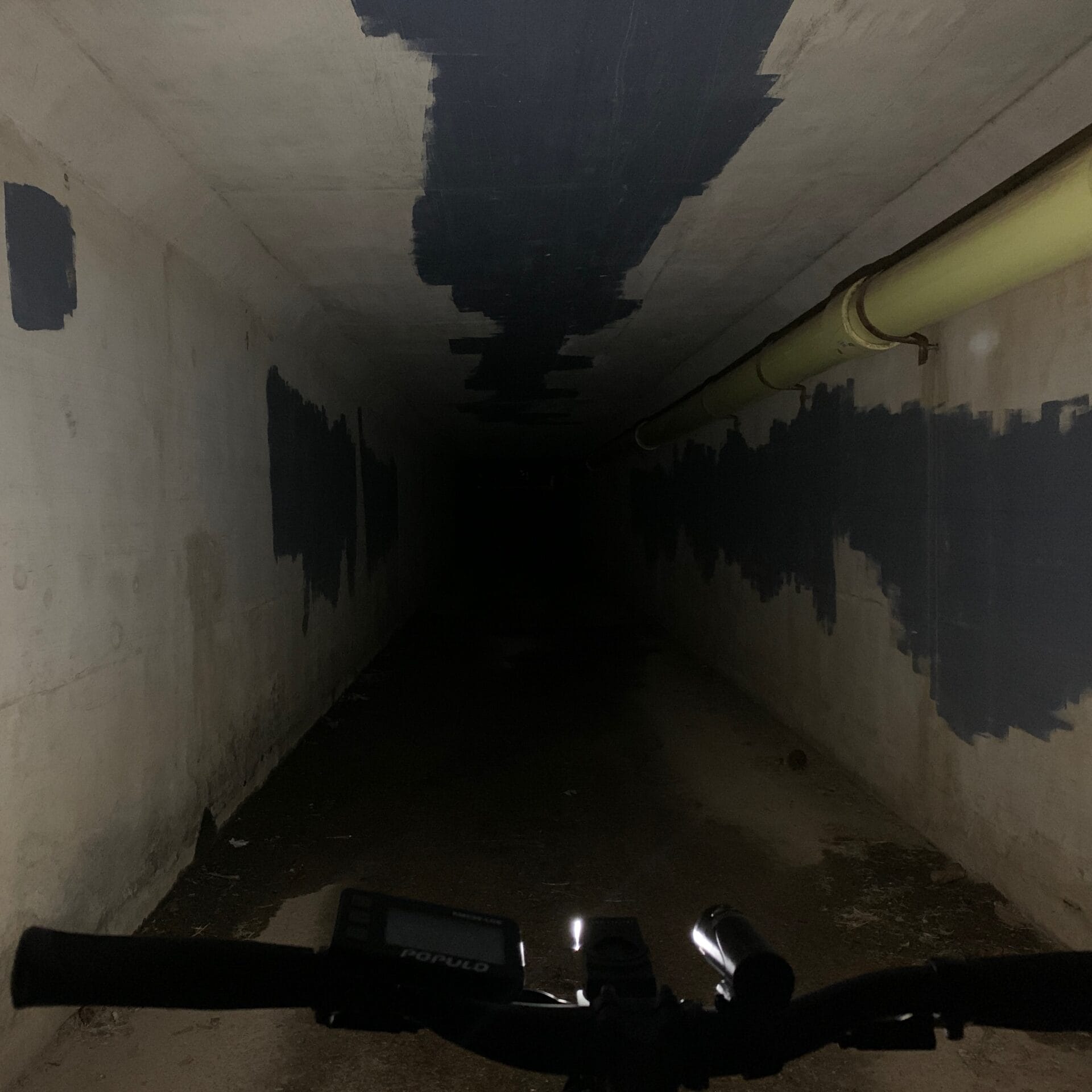
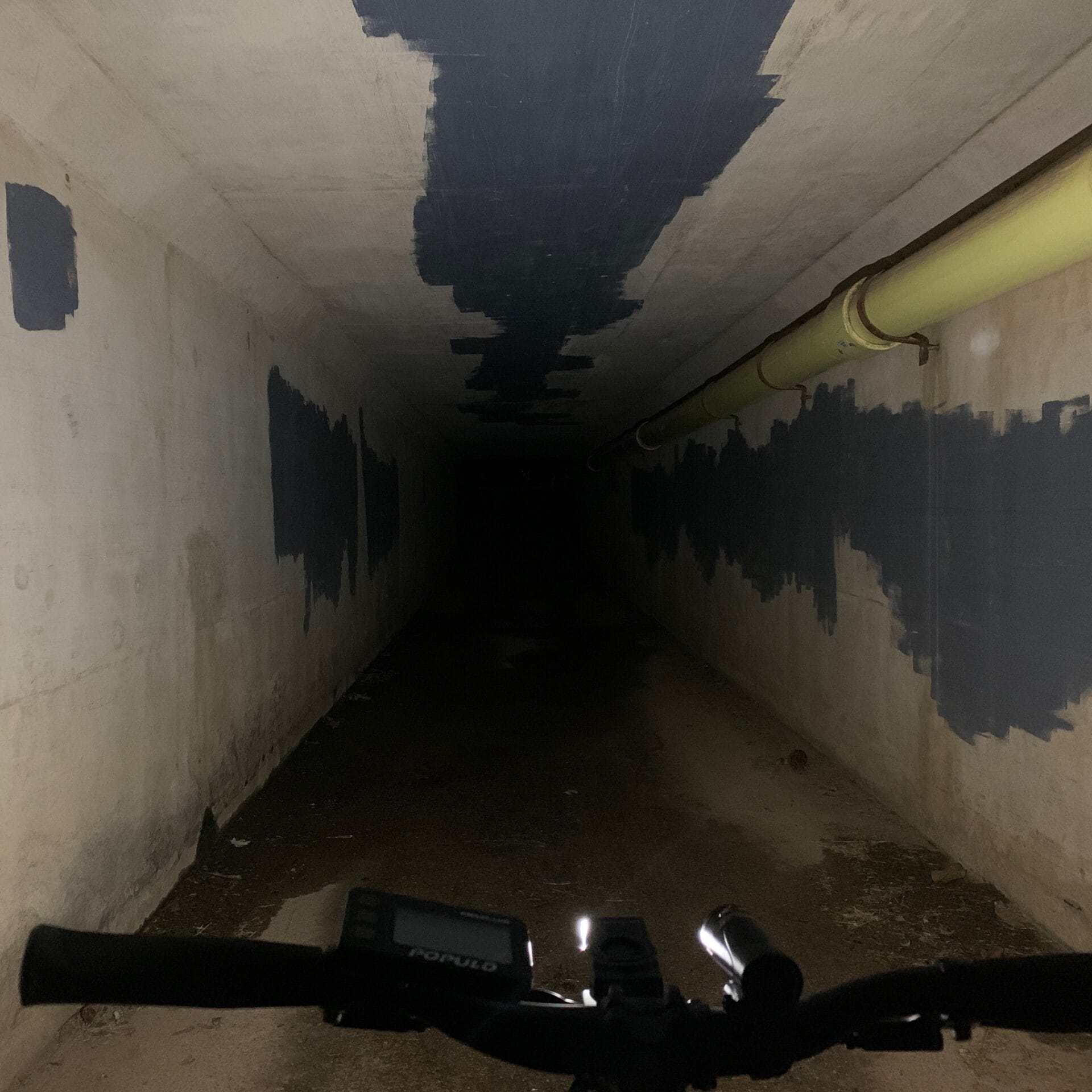
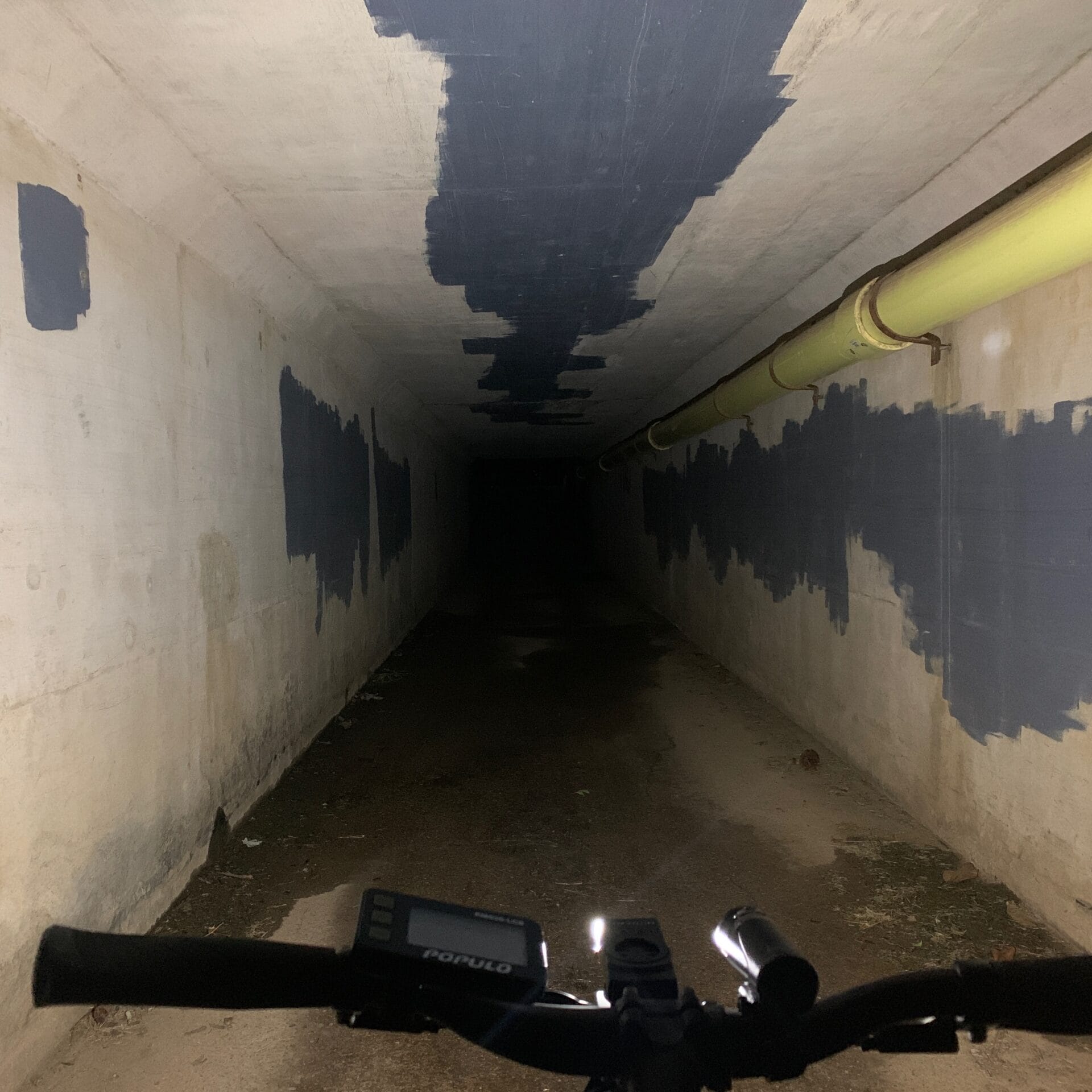
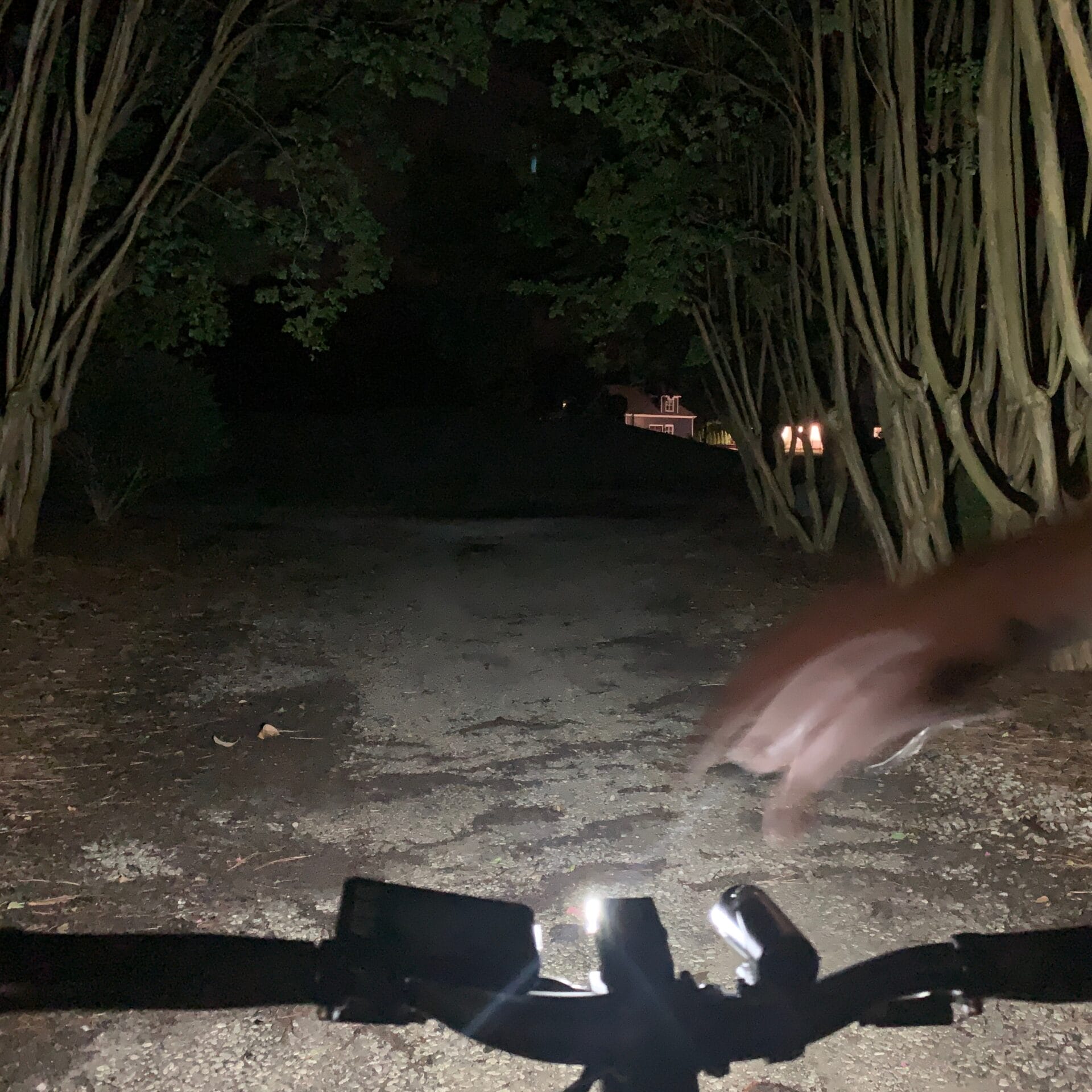
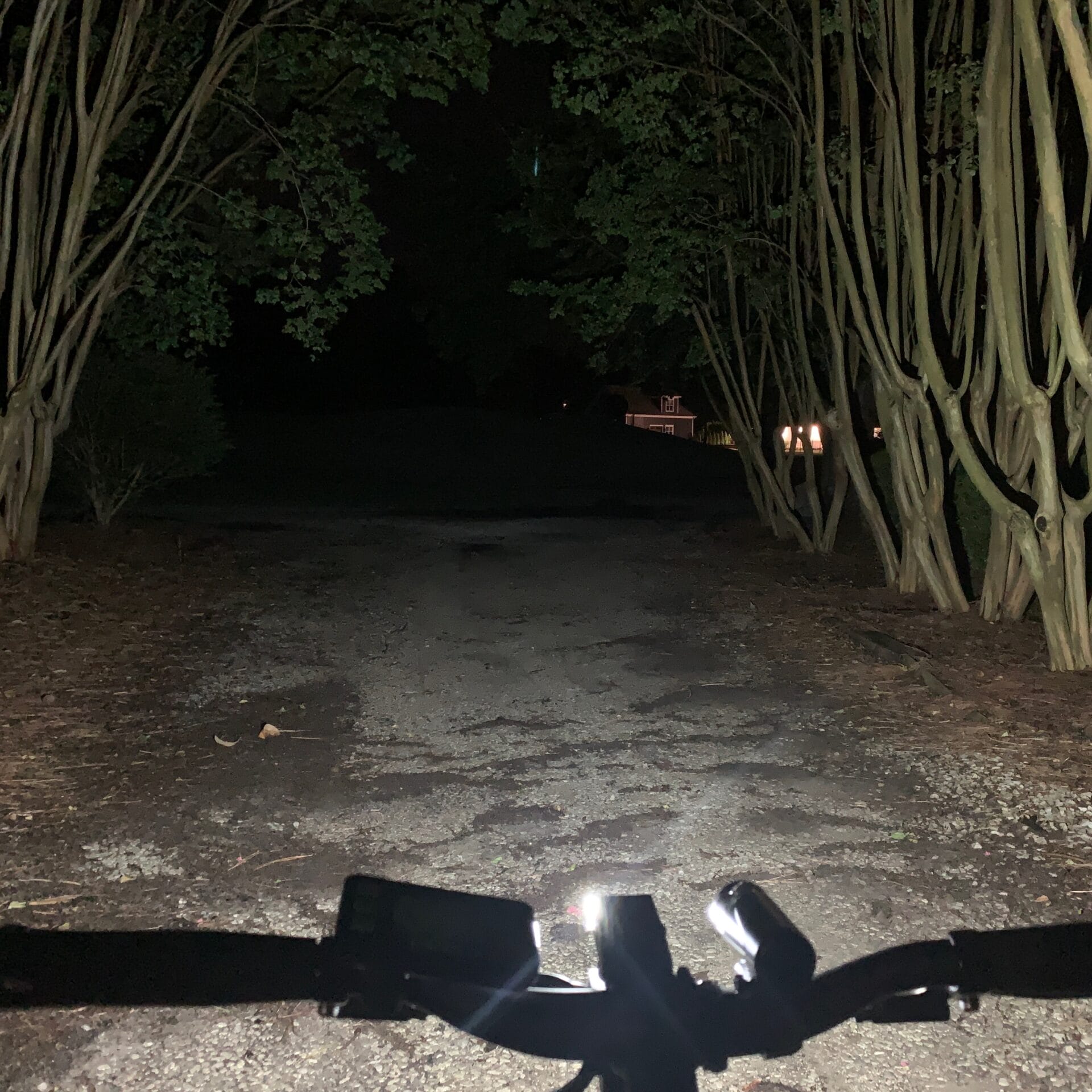
The 350 lm light’s LED panel creates a flood-like beam, spreading widely with no hotspot, ideal for visibility—drivers notice it from 100+ meters—but its throw is only 5–8 meters, confirming it’s not for night riding.
The 350 lm’s LED panel creates a flood-like beam, spreading widely. But after a few meters it is hard to tell what is in front (see pictures in tunnel). Its 5–8 meter throw, seen in tunnel images, confirms it’s not for night riding. It also lacks a top cut-off, shining upward unnecessarily.
The fixed-angle mounting can misalign the beam on sloped mounts, though my adapter fix (see below) corrects this. These tests are subjective, and ambient light or road conditions may vary results, but the 1000 lm suits commuting, while the 350 lm excels as a daytime or backup light.
Adapter Fix
The KOM Cycling Quick Release Lights are quick and easy to use, which is one of their biggest appeals. However, there is a downside to this simple mounting design: the light is fixed at the angle of your mount.
KOM Cycling addresses this issue (somewhat poorly) on the 1000 lm light by offering the 30° adjustability in 10° increments, which is insufficient, and ignored it on the 350 lm light. After just the first ride, I recognized the issue and, with a few different combinations of adapters, devised a solution. Using the following adapters allows for refined light adjustment but restricts you to attaching the light underneath the out-front mount.
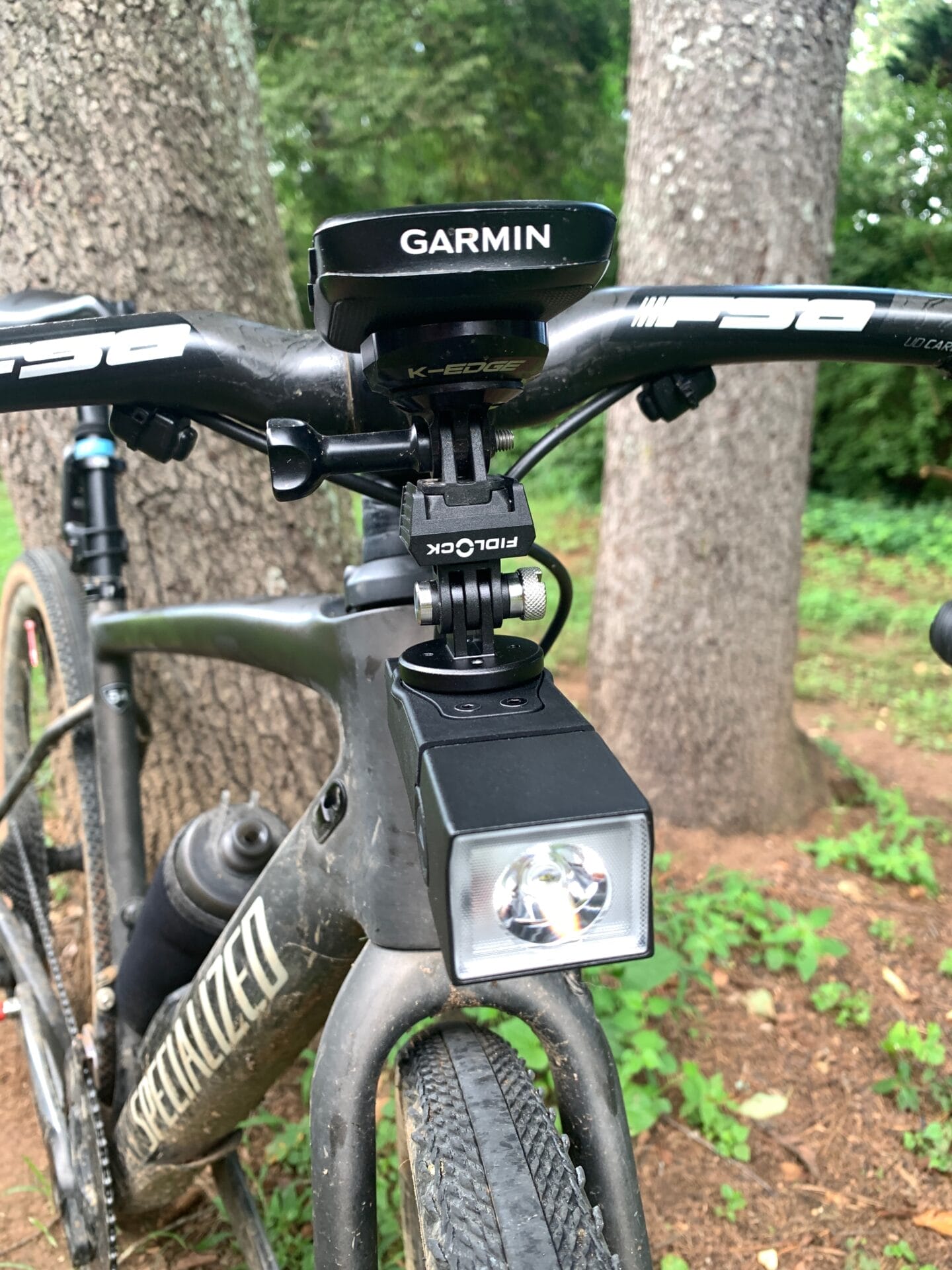
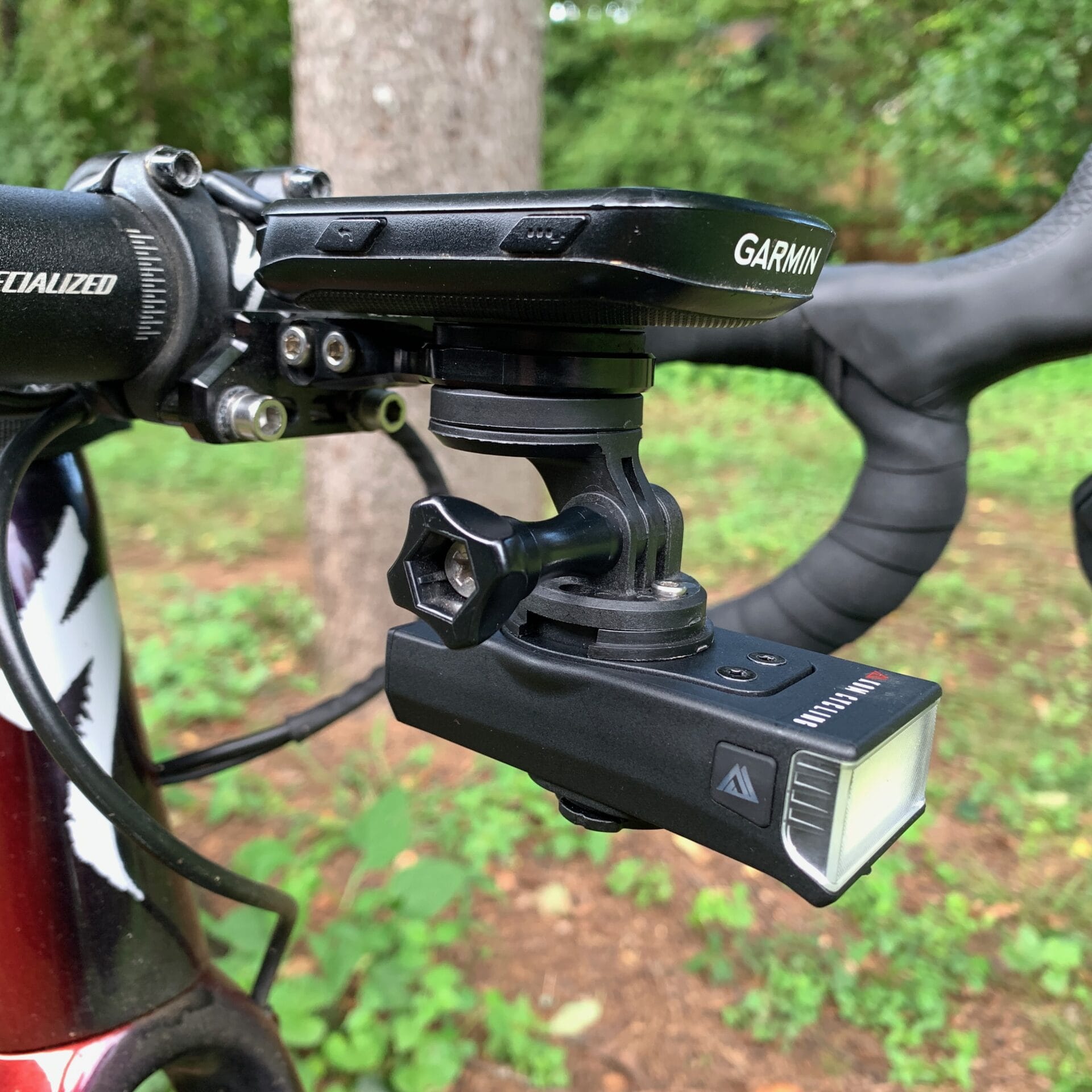
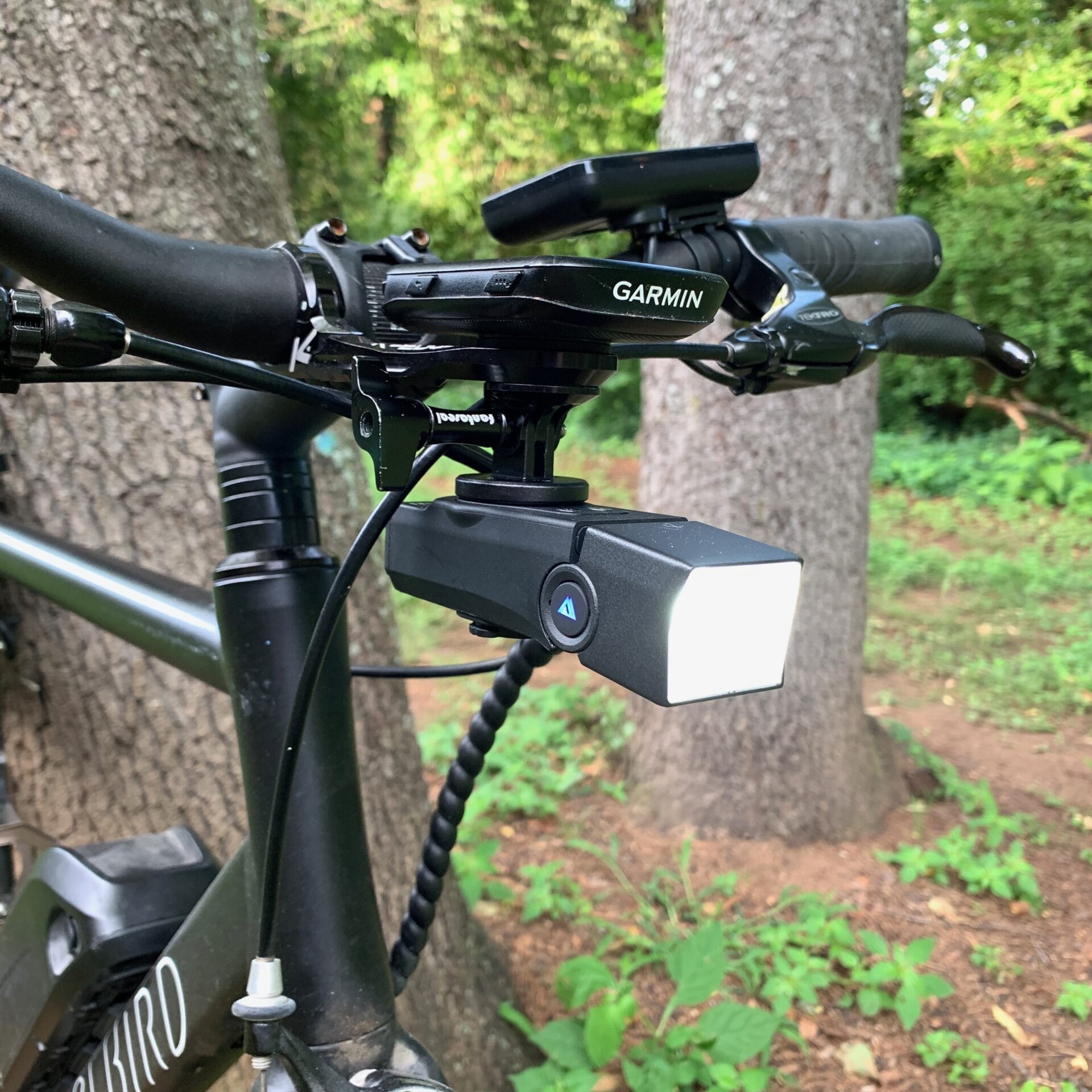
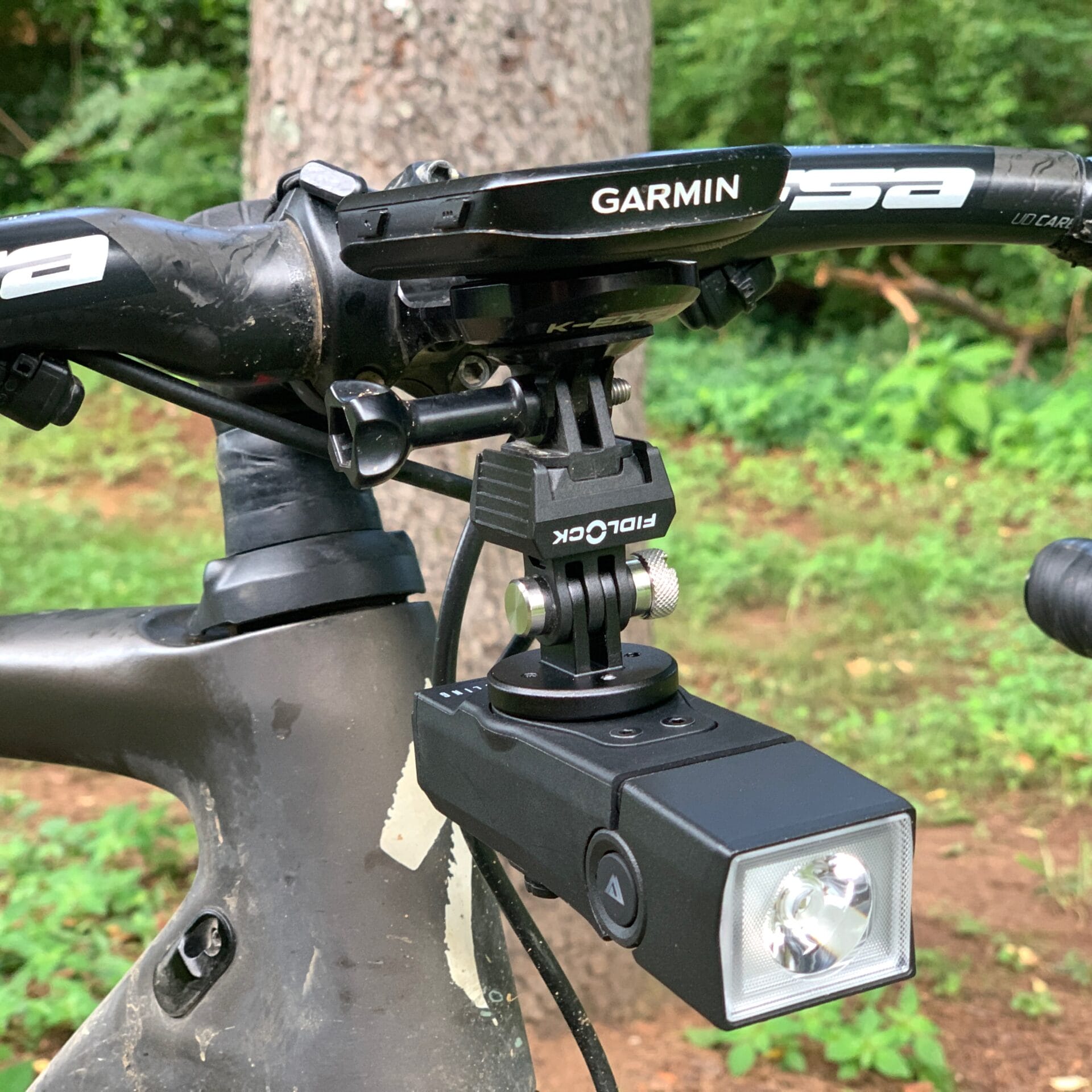
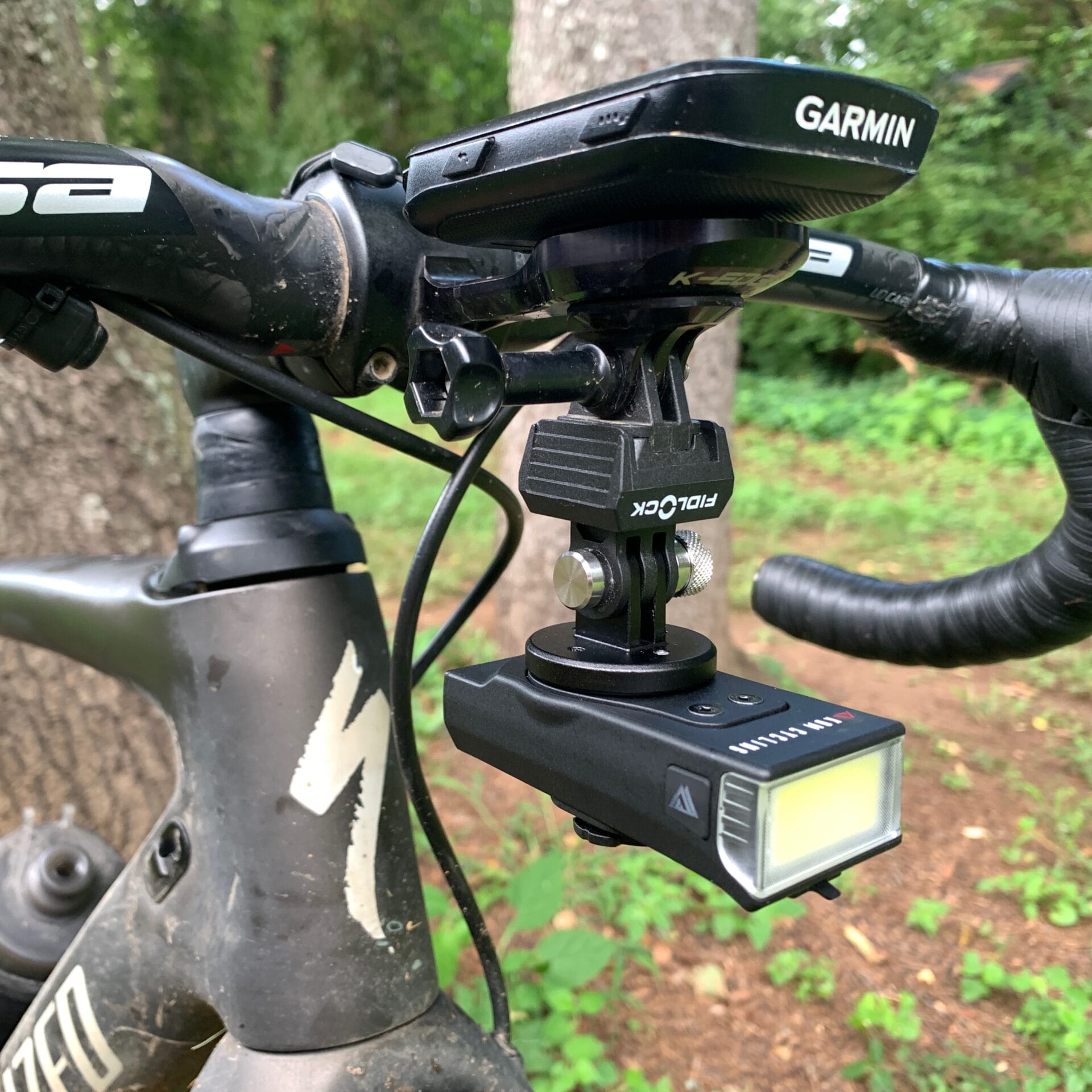
For Garmin and KOM Cycling out-front mounts with a male quarter-turn on the bottom side, use a combination of adapters: a Garmin quarter-turn Female to GoPro adapter attached to a GoPro to Garmin male adapter. This creates a hinge between the device and the light, allowing for precise adjustment (including vertical adjustment).
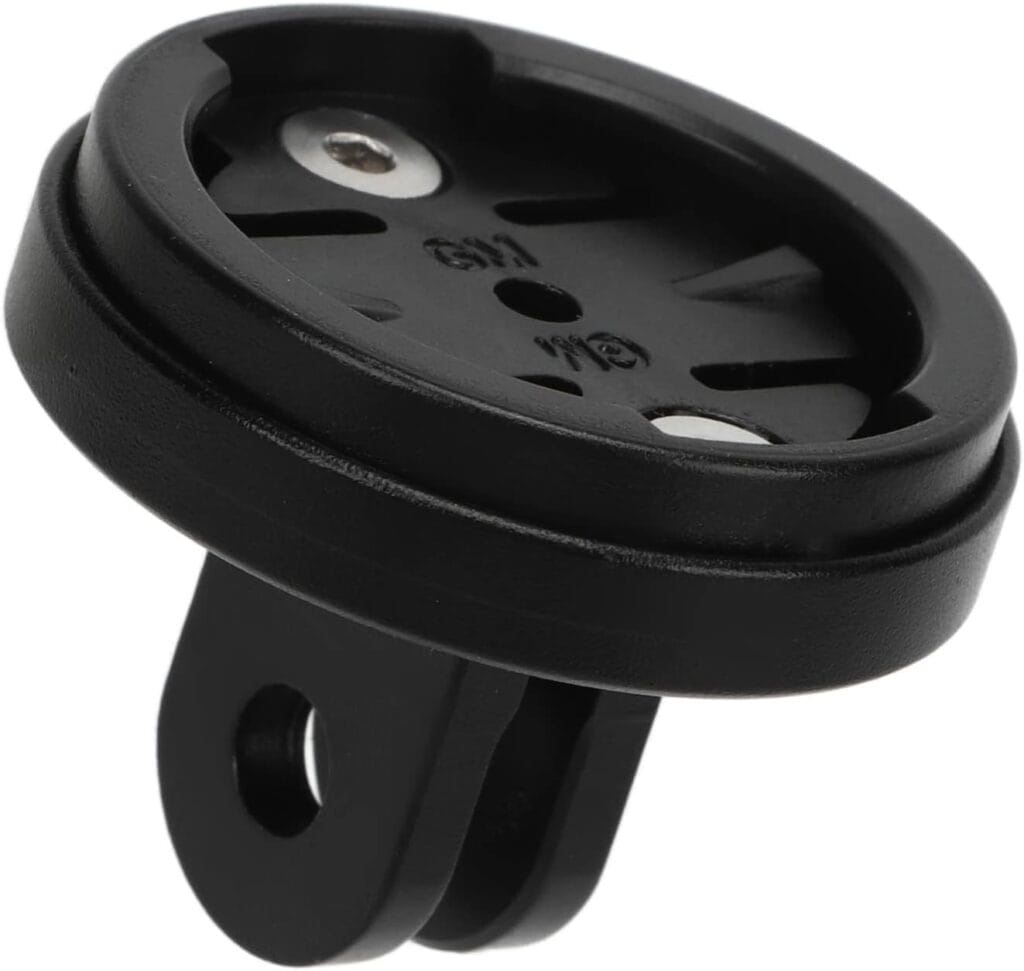
A second option is for out-front mounts with a GoPro mount underneath. This requires a single adapter: a GoPro male to Garmin quarter-turn male.
A third mounting option uses the Fidlock Pin Clip with the GoPro adapter mentioned above. The pin clip allows me to switch between my GoPro and a light easily, even while riding.



Things I Would Change
The KOM Cycling Quick Release Light 1000 lm has a 30º adjustability, but it’s not really mentioned on the website that the increments are in 10º. The adjustability is better than nothing, but it is not great. I think the rotational increments should be much finer (5º at least) since one’s out-front mount will be in a fixed position, and pretty much everyone’s mount will be at a different angle (because of preference, fit, or other reasons).
Some riders have their out-front mounts sloped downwards, making mounting these lights on the top side essentially useless (see my adapter fix). KOM Cycling should consider adding vertical adjustment as well.
These lights don’t have a cut-off line like other light manufacturers. With advancements in LEDs and lenses, I think having light that focus light better and doesn’t blind oncoming traffic is very important.
These lights don’t have a lock-out mode to prevent them from turning on accidentally, for example, in a bag while traveling. It seems odd this wasn’t included since this is standard on most lights.
Since the 1000 lm light has a much larger battery, it seems strange that only the 350 lm light has the discharging feature that allows a device to be charged from the light. I am not sure the reasoning behind this, but I think it should have been included with the 1000 lm light.
Lastly, something that is a pet peeve of mine with other lights is the remaining battery life indicator light range. Though the percentages are a bit tighter spaced than other lights, they are spread out too much. A fourth indicator light or flashing pattern should be included to reduce the remaining battery life spread so one has a better sense of where the battery life really is.

Final Thoughts
The KOM Cycling Quick Release Light is a decently well-executed light, especially considering that this is KOM Cycling’s first set of lights. The 1000 lm light is the first light of that size to use the Garmin quarter-turn mounting. Other companies have attempted this with smaller lights, which makes more sense.
I think the KOM Cycling Quick Release Light 1000 lm is pushing the limit. Anything larger, I would prefer a GoPro mounting system. The quarter-turn mounting, I think, is the main driver for someone getting this light because it doesn’t require an additional mount, and it is very quick and easy to use.
But the main benefit of this light (the mounting system) is also one of its big down falls. I think for commuting or road riding on relatively smooth surfaces, these lights will do fine, but for mountain biking or gravel biking on rough surfaces, not so much. There is only so much stress the little mounting tabs can take, and I can see them potentially breaking.
I think there should be a top plate that has a direct GoPro adaptor for a more secure mount and more adjust ability.
Personally, I don’t think the KOM Cycling Quick Release Light 1000 lm is a great light. I think the light intensity test shows it is sub-par compared to similar lights. Though the runtimes are typical, it is hard to justify purchasing this light, especially at the individual price points. The C1 light in the above comparison is about $40 USD cheaper and performs significantly better.
The KOM Cycling Quick Release Light 350 lm is a decent light for what it is. The discharge feature is nice in a pinch, but using it once is going to drain most of the battery. So, it really should be saved for emergency use.
The 350 lm light is very comparable to the Ravemen FR300 in price and specs though slightly more expensive. I think the FR300 is a bit sleeker though and provides a wider beam pattern (the LEDs wrap around the side of the device).
Purchasing the KOM Cycling Quick Release Light 1000 Lm and 350 Lm bundle will save you a decent amount of money, and if purchased during a sale, it makes them a lot more reasonably priced.
I am not sure if this is a one-time product and KOM Cycling is just exploring the cycling light market, or if this is a full-on effort and they will be developing more lights in the future. The cycling light market is already flooded with lots of light manufacturers, so I’m sure it isn’t an easy market to get started in, as there are already many companies solely focused on lights.
It is my opinion, though they seem to be well made lights with some interesting features, performance-wise, they don’t quite stack up against the competition. It is hard to say what the long-term durability and lifespan of these lights are, but as I continue to test these lights out, I will post an update on how they perform.


Author Conflicts
I purchased the KOM Cycling Quick Release Lights with my own money. I did not receive any compensation from KOM Cycling to review these products. KOM Cycling was not involved with the information in this article (before or after). This product was reviewed on my own accord to provide information about the product and hopefully give readers useful information to help guide their decision in purchasing these products.
SUPPORT JAYLO CYCLING
Did you find this post useful? If you have any questions, feel free to leave a comment below. If you have any suggestions of reviews or things you would like to see in the future contact me. My reviews are thorough and often take a significant amount of time to produce.
Please consider checking out my Instagram, YouTube, and Facebook accounts to show me support there. If you feel generous and have the ability, consider buying me a coffee to help support this site. Thank you for taking the time to check out my website and don’t forget to Subscribe to my newsletter too.